
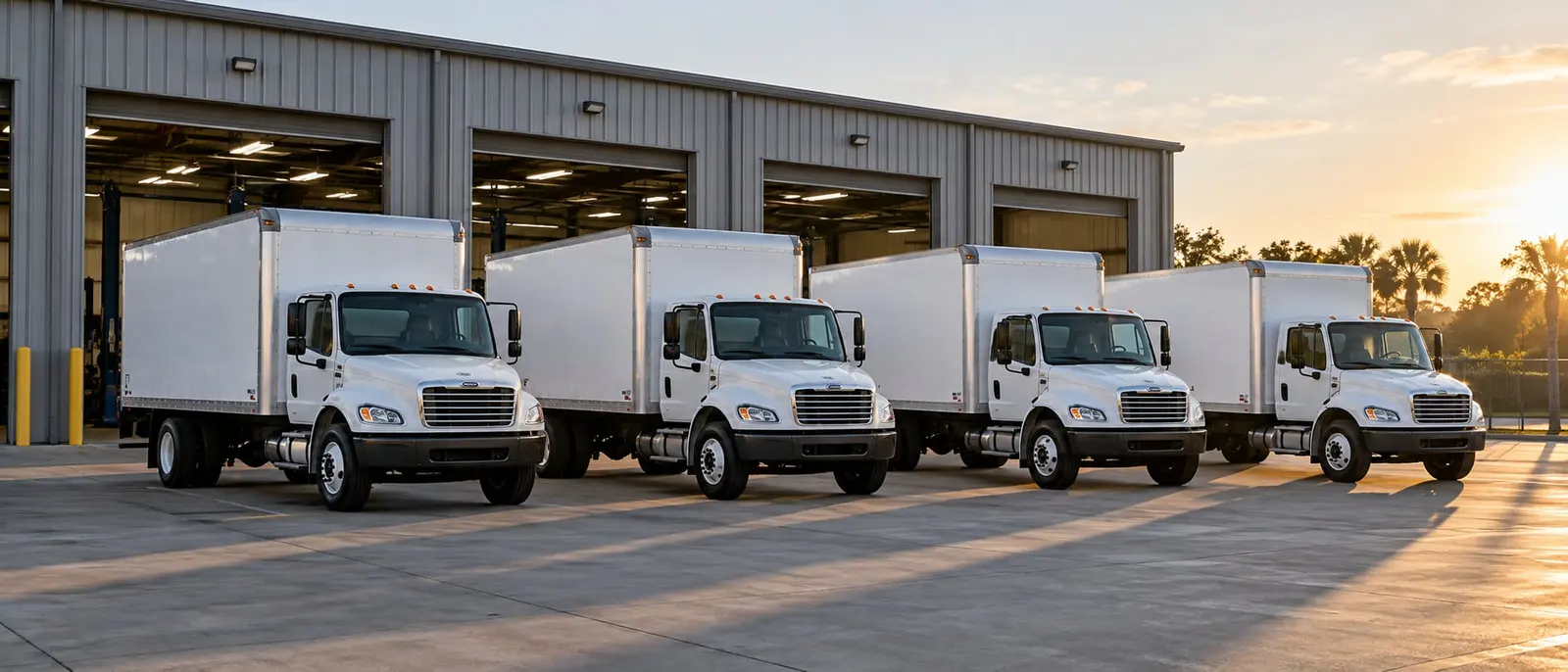
Much of the drilling around Brooksville is water wells and ground investigation. Rural homes and farms in Hernando, Citrus and Pasco counties draw water from wells into the Floridan aquifer, and the limestone underneath, with its sinkholes and voids, calls for geotechnical drilling before anything substantial gets built. Either way, the rig rides on a truck, often runs off that truck’s drivetrain, and goes nowhere if the truck does not. RDI Power maintains and repairs drilling fleets from our Brooksville shop and on-site.
The trucks behind a drill rig
- Rig carrier trucks. Medium and heavy duty chassis with the rig mounted on the frame
- Water trucks. Supplying water for drilling and cleanup
- Pipe and tool trucks. Carrying casing, rods and tooling
- Service and crew trucks. Usually heavy duty pickups and cab-and-chassis trucks
- Lowboys and trailers. Moving track-mounted rigs between sites
Many truck-mounted rigs are driven by a PTO off the truck’s transmission. Others carry a separate deck engine. Either way, the truck’s engine, PTO driveline and chassis are part of the drilling system, and a failure in any of them stops the hole.
Where rig trucks wear out
Stationary hours
A PTO-driven rig runs the truck’s engine for hours at a steady speed while the truck sits still. That piles up engine hours with no miles to show for it, keeps exhaust temperatures in a range where the particulate filter loads up, and works the cooling system with no road air through the radiator. See exhaust and emissions.
PTO and driveline
PTOs, driveshafts, U-joints and carrier bearings carry rig loads for hours at a time. Loose mounting bolts, leaking PTO seals and worn U-joints are common findings on rig trucks. See drivelines.
Heavy chassis loads
The rig, the mast, a load of pipe and a tank of water push a truck close to its ratings every day. Springs, frames, brakes and tires show it first.
Off-pavement access
Pastures, building lots and soft shoulders are where wells and borings go. Mud packs into brakes and wheel ends, and rough access roads wear suspension and steering.
Cooling
Long stationary run times in Florida heat are hard on radiators, fan drives and coolant. A clogged cooling stack that would be fine on the highway can overheat a truck that is running a rig in a sunny field. See radiators and cooling.
How RDI Fleet supports a drilling contractor
- PM by engine hours, counting rig time, not just road miles
- Driveline and PTO checks at every PM: mounting, seals, U-joints and shafts
- Cooling system service matched to stationary run time
- Aftertreatment checks, with parked regenerations when the system calls for them
- Yard visits from our mobile technicians, so rig trucks are serviced where they park
- Annual DOT inspections for carrier trucks and trailers that need them
- Photo records of every inspection, kept by unit
The mast, rotary head, mud pump and other drilling components are specialized equipment with their own service needs. Our work is the truck, its engine and the drivetrain that powers the rig, all inside a fleet maintenance plan built around rig hours.
Why downtime matters for drillers
A drill crew runs on a booked schedule: a crew, a rig and a site lined up ahead of time. When the rig truck does not start, the crew is paid to wait, the job slides, and the next job slides behind it. For a water well, there may be a family without water waiting on that rig. Hour-based maintenance and a truck that is inspected before it heads out are cheaper than any of that. So is a technician who comes to the yard, where a problem can be fixed the evening before a job instead of discovered at the site the next morning.
Keep the rigs drilling
Tell us what your rig trucks are built on and how many hours they run. We will set maintenance by the hours they actually work, so the rig is ready on the morning it is booked.