
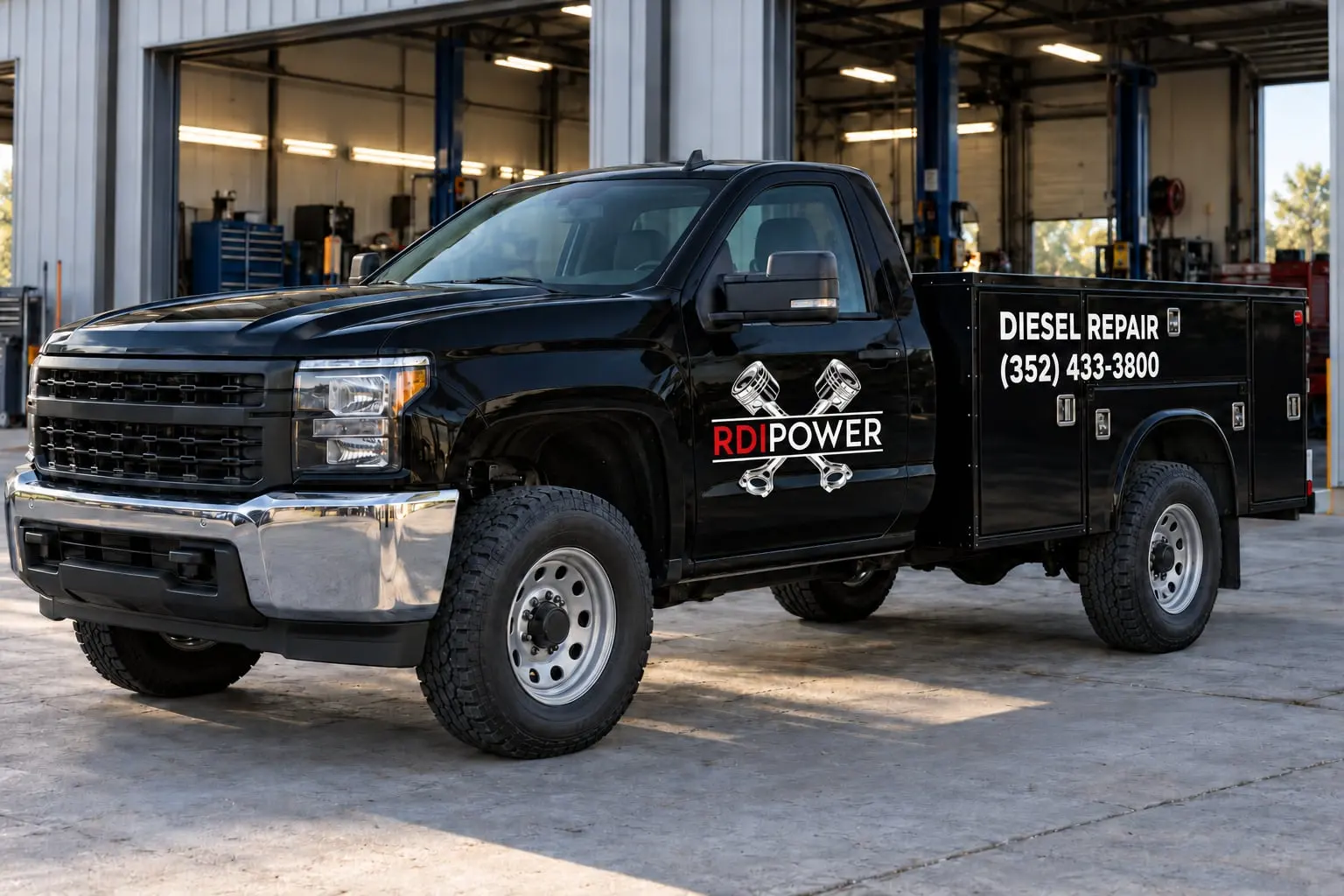
RDI Power started as a mobile unit. Before there was a shop in Brooksville, Ryan Bethell was driving to fleets between Brooksville and Tampa and fixing trucks where they sat. Mobile service is still how RDI serves customers beyond the shop’s 25-mile radius: technicians come to your yard, your job site or the shoulder where the truck stopped, with the diagnostic software and tools to find the root cause and fix it there when the job allows.
What we do on-site
Diagnostics with dealer-level software
A mobile visit starts the same way a shop visit does, with a real diagnosis. Technicians connect to the truck with dealer-level diagnostic software, including Ford IDS on Power Stroke trucks and WiTECH on Ram, along with heavy duty scan tools for the big trucks. We read the fault codes, watch live data, run the tests the codes point to and confirm the failed part before anything is replaced. Guessing with parts is expensive in a shop. On a job site it also costs you a second visit. More on how we approach computer diagnostics.
Repairs
Many repairs are well within reach of a service truck, including:
- Sensor, wiring and connector faults behind warning lights and derates
- Starters, alternators, batteries and cables
- Belts, hoses and coolant leaks
- Air leaks, brake chambers, slack adjusters and air brake components
- Fuel filters, water in fuel and fuel delivery problems
- DEF and aftertreatment faults, including parked regenerations where the system allows it
- Lights and trailer wiring
Preventive maintenance and inspections
PM can happen where your trucks park: oil and filters, fuel filters, chassis lube and the same inspection checklist we run in the shop. Inspections, including annual DOT inspections, can be scheduled at your yard as well. For a fleet, that means drivers start the day with their trucks instead of losing a morning dropping a truck at the shop.
Roadside breakdowns
When a truck stops on the road, a technician comes to it. During shop hours anyone can call, and RDI Fleet accounts get roadside assistance 24/7.
Why on-site service costs less than it looks
The bill for a shop visit is only part of what a down truck costs. Taking it to a shop means a driver off the route to deliver it, often a second vehicle to bring that driver back, a tow if the truck cannot make the trip, and the truck sitting in a line until a bay opens. Then the same again to pick it up.
On-site service removes most of that. The truck stays where it is, the driver keeps working or goes home on time, and the technician’s diagnosis happens next to the truck instead of after a tow. For a fleet, PM at the yard also means a whole group of trucks can be serviced in a single visit instead of shuttled to a shop over several days. That is why mobile service is part of how the RDI Fleet program works.
What a safe on-site job needs
On-site work is still shop work, so it needs a safe place to do it. The best spot is firm, level ground with room to walk all the way around the truck and space for the service truck to park beside it. A paved yard or a hard-packed lot is ideal. Soft sand after a Florida rain is not.
It helps to have the keys, a contact who can answer questions about the truck, and access through any gate. For a fleet visit, a list of the units to be serviced and any driver complaints lets the technician plan the order of work. On a roadside call, the technician decides whether the location is safe to work. If it is not, we talk through moving the truck somewhere that is.
When a truck needs the bay
Some work should not be done on a shoulder or in a dirt lot, and we will say so. Major engine work such as overhauls and in-frame rebuilds, transmission removal and rebuilds, and repairs that need a lift, heavy tooling or a clean, controlled space belong in the Brooksville shop.
When that is the answer, the technician explains what failed and why, and we plan the move with you: when the truck can come out of service, how it gets to Brooksville, and what that means for your schedule while it is down. The diagnosis done on-site carries straight into the shop, so nobody starts over. Our transmission repair and rebuild and heavy-duty truck repair pages cover what happens once it arrives.
Who we serve on-site
- Fleet yards. PM, inspections and repairs where your trucks park overnight, planned around the hours they are not working.
- Construction and job sites. Dump trucks, mixers, service trucks and equipment haulers that cannot leave in the middle of a project.
- Farms and ranches. Farm trucks, cattle haulers and stock trailers out on the property, where a sick truck may not survive the trip to town.
- Municipal fleets. Public works, utility and county trucks serviced at the yard, so crews keep their trucks for the day’s work.
- RV owners. Diesel pushers at home or at a campground, with engine, chassis and starting problems diagnosed on the spot. See RV service and repair.
- Broken-down rigs. Tractors, box trucks and pickups stopped on I-75, US-19, the Suncoast Parkway or SR-50.
Where we go
Our shop is in Brooksville, in Hernando County. Within about 25 miles, across much of Hernando, Pasco and Citrus counties, you can bring the truck in or have us come out. Beyond that, technicians cover Central Florida up to about 100 miles from Brooksville: the Tampa Bay area, Lakeland and Polk County, Ocala, The Villages, and east toward Orlando. RDI does not have shops in those cities. We come to you.
We do not quote arrival times we cannot keep. When you call, we tell you straight when a technician can get there, based on where the truck is and what is already on the schedule. For fleets on a plan, on-site PM is scheduled ahead, which is the most reliable way to keep trucks earning. The areas we serve page lists the communities we cover.
Same reports, same warranties
On-site work is documented the same way as shop work. You get a digital vehicle inspection with photos and technician notes covering what the technician found, what was repaired and what should come next. The work carries the same warranties as work done in the bay, with RDI Power’s labor warranty of 3 years / 36,000 miles, and 2 years / 24,000 miles on repairs for RDI Fleet accounts.
What to have ready when you call
- Where the truck is: the street address, the yard gate, or the highway, direction of travel and nearest exit or mile marker
- Year, make, model and engine
- What happened, what you heard or felt, and which warning lights are on
- Any fault codes the dash or a code reader is showing
- Whether the truck is loaded, and whether it is in a safe spot off the travel lanes
If the truck is on a highway shoulder, get yourself clear of traffic before anything else. The truck can wait. You should not be standing beside it on I-75.
Bring the repair to the truck
Tell us where the truck is and what it is doing. We will tell you whether it is a job for the service truck or the shop, and when a technician can be there. Fleets that want on-site PM on a schedule can start with an RDI Fleet plan.