
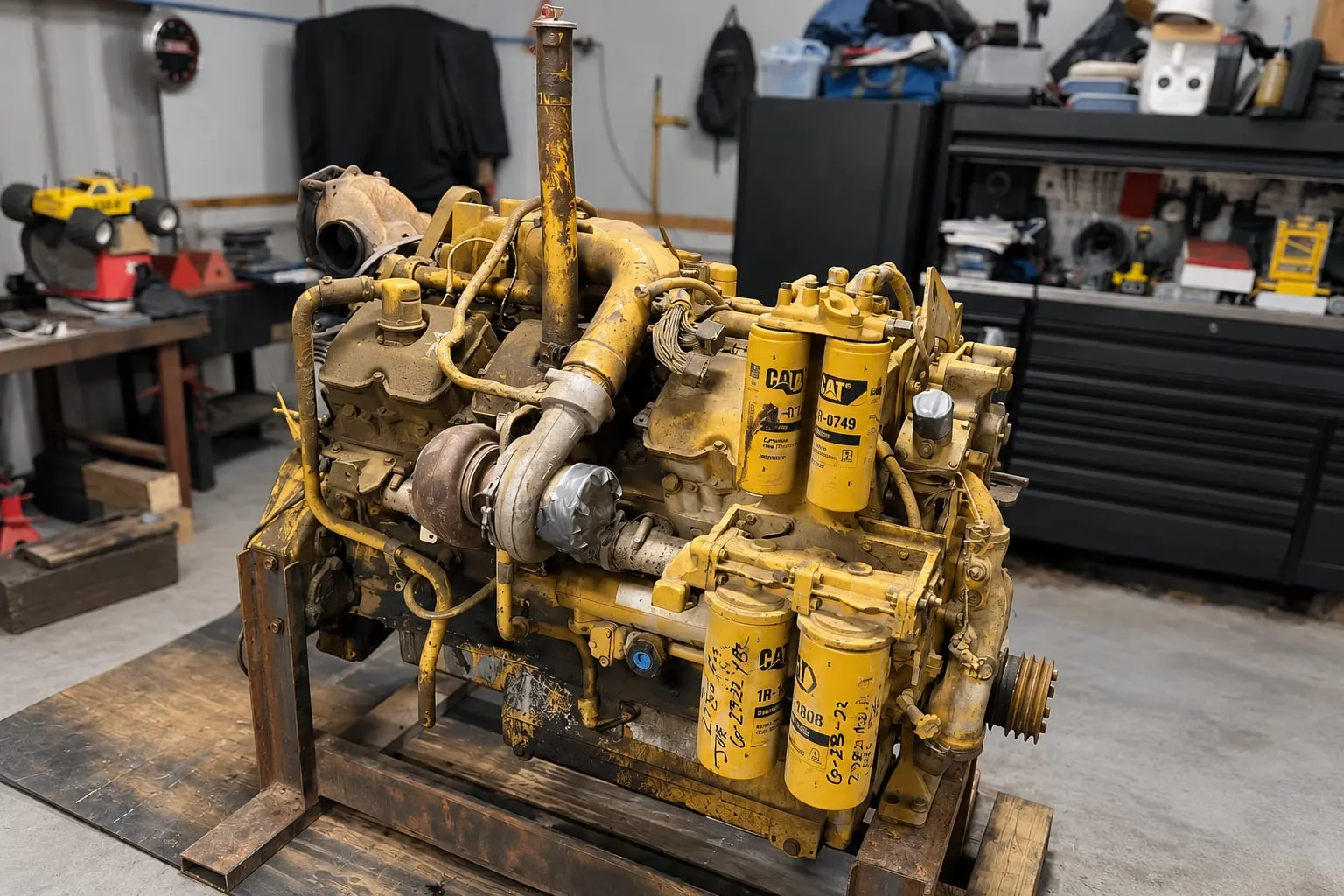
RDI Power is Caterpillar certified, and Cat engines are some of the most capable heavy diesels still working on Florida roads and job sites. We repair them at our Brooksville shop and on-site: C15 and C13 engines in Class 8 trucks, C7 and C9 engines in medium duty trucks and diesel pushers, the 3406 in older tractors and vocational trucks, and Cat engines in equipment. Owner Ryan Bethell’s first job was building engines, and Cat work at RDI Power is held to that standard.
Cat engines we work on
- 3406: the 14.6L inline 6-cylinder that ran in heavy trucks for decades, from the mechanical 3406A and 3406B through the 3406B PEEC and the electronic 3406E
- C7: 7.2L, common in medium duty trucks and diesel motorhomes
- C9: 8.8L, common in diesel pushers and equipment
- C10, C11 and C12: engines found in lighter Class 8 and vocational trucks
- C13: 12.5L, used in Class 8 and vocational trucks
- C15: 15.2L, the successor to the 3406E and a long-running Class 8 engine
Caterpillar stopped supplying engines for new on-highway trucks around 2010, but a well-maintained Cat engine can stay in service a long time. That makes accurate diagnosis and good repair work worth more, not less.
Common Caterpillar engine repairs
HEUI and unit injector work
The C7 and C9 use HEUI injection, where high-pressure engine oil actuates the injectors, so oil condition and the high-pressure oil pump matter as much as the injectors themselves. The C10, C12, C13 and C15 use mechanically actuated electronic unit injectors driven off the camshaft, which need their overhead adjustments done on schedule. We diagnose injector performance, replace injectors and repair the fuel supply system that feeds them. See diesel fuel injection.
Turbos and boost
Boost leaks, worn turbos and oil leaks past turbo seals cost power and raise exhaust temperatures. ACERT C15 engines use 2 turbochargers in series, which gives more places to check when boost is low. We test the whole air system before condemning a turbo.
Head gaskets and liners
Head gasket failures show up as coolant loss, overheating, white smoke or combustion gas in the cooling system. On wet-liner engines such as the 3406 and C15, a lasting head gasket repair depends on correct liner projection and a sound counterbore, so we measure both instead of just bolting on a new gasket.
Oil leaks
Front and rear crankshaft seals, oil coolers, oil pans and valve covers all leak with age. We clean the engine, find the actual source and repair it.
Electronics and sensors
From the early PEEC system to the 3406E and C-series ECMs, Cat engines rely on electronic controls, wiring harnesses and sensors that age. Chafed harnesses, corroded connectors and failed sensors cause misfires, low power and intermittent shutdowns that look mechanical until they are tested. Our article on common Caterpillar 3406 PEEC engine issues covers that engine in detail.
Emissions on later engines
Cat’s 2007 and later on-highway engines carry a diesel particulate filter and Cat’s own regeneration system, and they bring the soot, sensor and regen problems that come with it.
In-frame overhauls done to specification
An in-frame overhaul can give a proven Cat engine a long second life, but only if the measurements are right. During an overhaul we check the top deck for flatness and cracks, inspect the counterbores where the liners seat, measure liner projection, inspect the crankshaft and bearings, and inspect the cylinder heads and valves. Our article on 5 things to look for during a CAT engine overhaul explains each step.
Where we see Cat engines
- Class 8 and vocational trucks: tractors, dump trucks and other heavy trucks. See semi and heavy duty truck repair.
- Motorhomes: C7, C9 and larger Cat engines in diesel pushers. See RV chassis repair.
- Medium duty trucks and buses: C7 and similar engines in work trucks and buses.
- Equipment: Cat-powered equipment for construction and other industries, often serviced on-site.
Signs a Cat engine needs attention
- More blow-by, more oil added between changes, or oil being pushed out the breather
- Coolant loss, overheating or white smoke
- Low power, black smoke or a turbo that sounds different than it used to
- Hard starting, rough running or intermittent shutdowns
- Active diagnostic codes or a check engine lamp that keeps coming back
When you call, have the engine model and serial number from the engine information plate ready. The serial number prefix tells us exactly which version of the engine you have, and that decides which parts, specifications and known issues apply.
On-site Caterpillar service
Moving a large Cat-powered machine to a shop is expensive and slow. Our mobile technicians bring diagnostic tools and repair capability to job sites, yards and roadside locations for diagnostics, general maintenance and many repairs. Some large-scale equipment work is outside what we do, including excavator swing bearings and track replacement, so call first and we will tell you whether yours is a job we can handle. See mobile diesel repair.
Every Cat repair includes a digital vehicle inspection with photos and technician notes and carries our 3-year/36,000-mile labor warranty, or the 2-year/24,000-mile RDI Fleet warranty on fleet repairs. If your Cat engine is down or running wrong, call the shop or request service online, and tell us the engine model and what it is doing.