
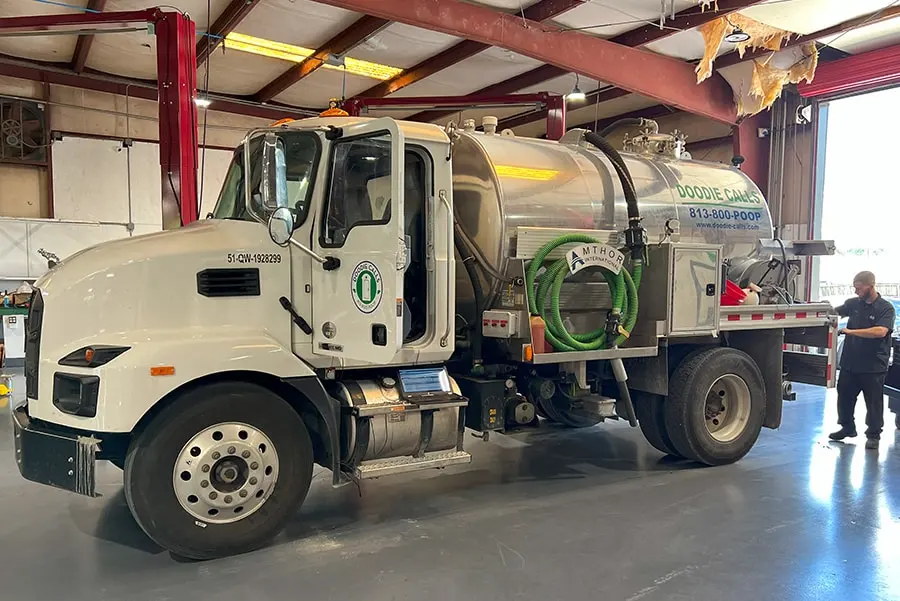
A Mack is built differently from most heavy trucks. On many of them the engine, the automated transmission and the axles come from Mack or its parent, the Volvo Group, instead of a mix of outside suppliers. For a repair shop, that means diagnosis follows Mack’s own systems, and a fault in a single controller can surface as a complaint somewhere else. RDI Power works on Macks in our Brooksville shop and on site at yards and job sites around Central Florida.
Mack models on our lifts
- Anthem and Pinnacle: on-highway and regional tractors.
- Granite: the vocational truck under dump bodies, mixers and roll-offs, often riding on Mack’s Camelback rear suspension.
- LR and the older TerraPro: low-entry refuse trucks working stop-and-go routes.
- MD6 and MD7: medium-duty trucks with the Cummins B6.7 and Allison automatics.
- Older CH, Vision and RD trucks still earning a living on local routes and job sites.
Knowing which of these you run matters before the truck arrives. A Granite with an MP8 and an mDRIVE, an older Granite with a manual transmission and an MD7 with a Cummins share a badge and very little else in the service bay.
The Mack powertrain
MP7 and MP8 engines
The 11-liter MP7 and 13-liter MP8 are Mack’s own diesels, sharing their basic architecture with Volvo’s D11 and D13. Both pair EGR with a DPF and SCR dosed with DEF. On these engines we test EGR flow, NOx sensor readings and doser output against Mack specifications rather than generic numbers, because calibrations differ even where the hardware looks familiar.
The mDRIVE automated manual
mDRIVE is an air-shifted automated manual derived from Volvo’s I-Shift. A driver report of hunting gears, slow shifts or a refusal to engage can come from clutch wear, wet or low air supply to the shift actuators, a position sensor, or a calibration that needs an update. Checking the air dryer and supply pressure comes first, since that is the cheapest cause to rule out and a frequent culprit.
Older Mack engines
Pre-2007 Macks ran engines like the E7 and ASET. Parts support is thinner, so we confirm the failure carefully before ordering anything and talk through repair cost against the value of the truck.
Refuse and dump trucks wear differently
LR refuse trucks stop hundreds of times a day, which eats brake linings, drums and S-cam bushings far faster than highway work. Granite dump trucks carry heavy loads over rough ground, so the Camelback springs, torque rods and their bushings take a beating. Both spend long stretches at low speed or idle, which keeps exhaust temperatures down and pushes soot into the DPF; if a truck keeps asking for parked regens, we look for the injector, EGR or air leak problem making the extra soot. Our construction fleet page covers how we support job site trucks.
How diagnosis works on a Mack
Our first step is reading stored faults across the engine, aftertreatment, mDRIVE and ABS controllers together, then we record live data during a road test, or under PTO load if that is where the complaint lives. Hands-on tests confirm the cause: air leak checks, voltage drop on suspect circuits, and pushrod stroke measurements on every brake chamber. You get a digital inspection with photos before any work is approved. Brake findings are covered in more detail on our brake systems page.
When to call
- mDRIVE warnings, hunting gears or refusal to engage
- A DPF lamp or derate that keeps coming back
- Air leaks you can hear, or pushrod stroke out of adjustment
- Oil or coolant consumption that has changed
- Clunks from the rear suspension over bumps
A Mack that is down costs you a crew or a route. Call with the VIN and what the dash is showing, or set up an RDI Fleet plan so the next problem gets caught at a scheduled PM instead of on the shoulder.