
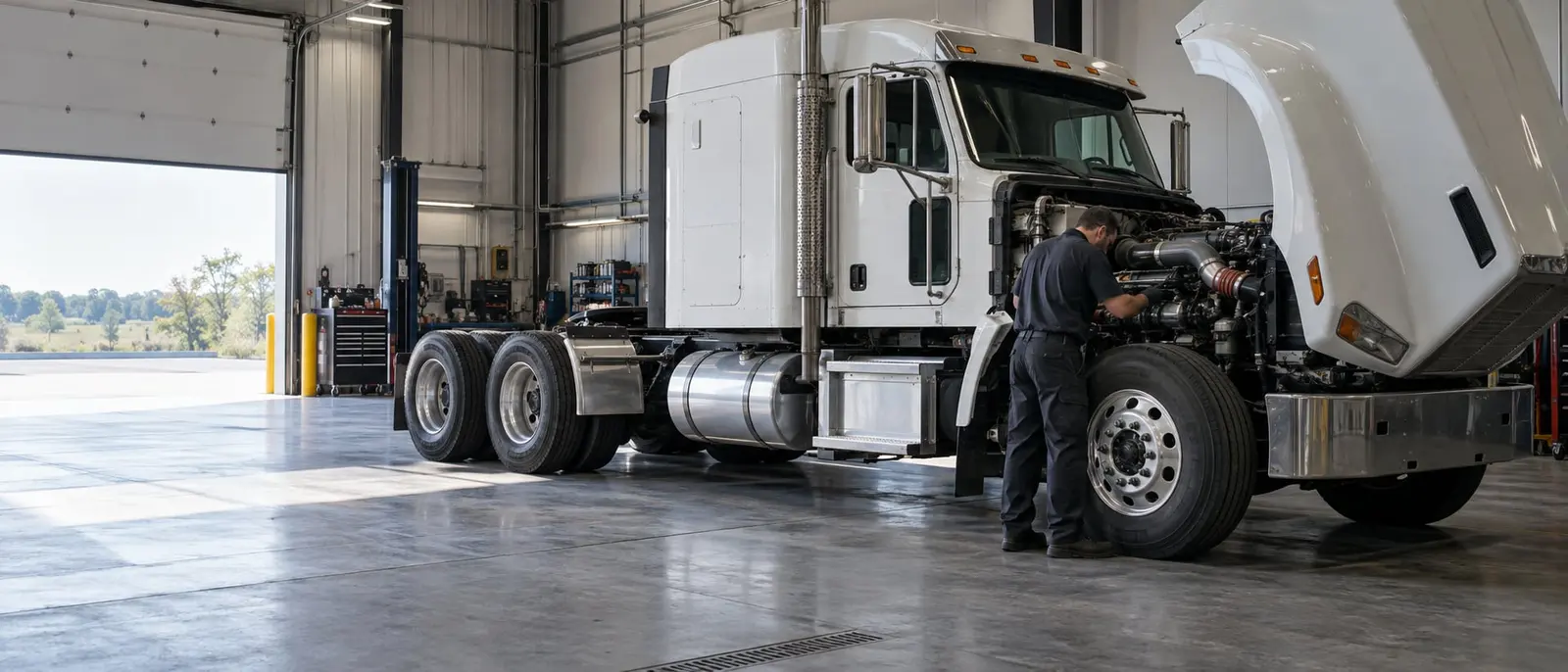
A trailer has no engine to throw a code when something is wrong. Bearings run hot, brakes drift out of adjustment and wiring corrodes, often without much warning until a light goes dark or a hub starts to smoke. RDI Power’s diesel technicians repair trailers in Brooksville, from semi trailers and flatbeds to gooseneck hotshot trailers and the equipment trailer behind a work truck, and they inspect the whole trailer while it is here.
Trailers we repair
- Box trailers and dry vans
- Reefer trailers
- Flatbeds and drop decks
- Belt trailers and belly dumps
- Gooseneck and hotshot trailers
- Equipment and utility trailers, including the ones that haul motorcycles, side-by-sides and ATVs
Brakes
Air brakes
Semi trailers stop on air: brake chambers, slack adjusters, S-cams, shoes and drums, air lines, gladhands and relay valves. We find air leaks, check adjustment, measure linings and drums, and replace what is worn. Brake adjustment is near the top of any inspector’s list, and a trailer that is out of adjustment puts more of the stopping work on the tractor. See brake systems.
Electric brakes
Gooseneck, hotshot and equipment trailers usually stop with electric brakes: magnets, shoes, drums and the wiring back to the truck’s brake controller. Weak or uneven braking often traces to worn magnets, a broken wire or a bad ground, and we test each wheel to find it.
Trailer ABS
Air brake trailers carry anti-lock brakes with their own warning lamp. When the lamp stays on, we read the ABS fault codes, then check wheel speed sensors, tone rings, modulator valves and wiring to find the cause.
Lights and wiring
Most trailer electrical problems are corrosion, chafed wires or bad grounds. Florida humidity, summer rain and pressure washing push water into connectors, and a single corroded ground can make several lights act up at once. We trace circuits, repair harnesses, replace lamps and reflectors, and check the 7-way connection at both the truck and the trailer. See electrical systems.
Suspension, axles and bearings
- Spring suspensions. Leaf springs, hangers, equalizers, bushings and U-bolts.
- Air ride. Air bags, height control valves, lines and shocks.
- Axles. Axle replacement and alignment, so the trailer tracks straight and wears its tires evenly.
- Wheel bearings and hubs. A leaking seal or a dry bearing can end with a wheel off the trailer. We check end play, repack or replace bearings, replace seals and service oil-bath hubs.
Tires, fenders, jacks and couplers
We replace tires, fenders, mud flaps and reflectors, repair tongue jacks and landing gear, and check couplers, safety chains and breakaway systems. On the truck side, we install and repair hitches so the connection between truck and trailer is as sound as the truck and trailer themselves.
Signs a trailer needs attention
- A hub that is noticeably hotter than the others after a run, or smells hot
- Grease or oil on the inside of a wheel or tire, which usually means a leaking hub seal
- Uneven or cupped tire wear on a single axle or side
- The trailer pulling to a side under braking, or brakes that drag
- An audible air leak with the trailer parked and aired up
- Lights that flicker over bumps, or work on the left side but not the right
- An ABS lamp that stays on after startup
Any of those is cheaper to fix in the shop than on the shoulder. We find the cause, show it to you in the digital inspection and fix it before it becomes a roadside call.
Trailer inspections
Trailers that run under FMCSA rules need their own annual inspection, separate from the truck. We inspect brakes, lighting, tires, wheels, suspension, frame, coupling devices and rear impact guards, and document it with a written report and photos. See DOT inspections.
Bring the trailer in
If a trailer is pulling to a side, losing lights or smoking at a hub, bring it in before it gets worse. If it is parked at your yard and should not be moved, ask about our mobile service.