
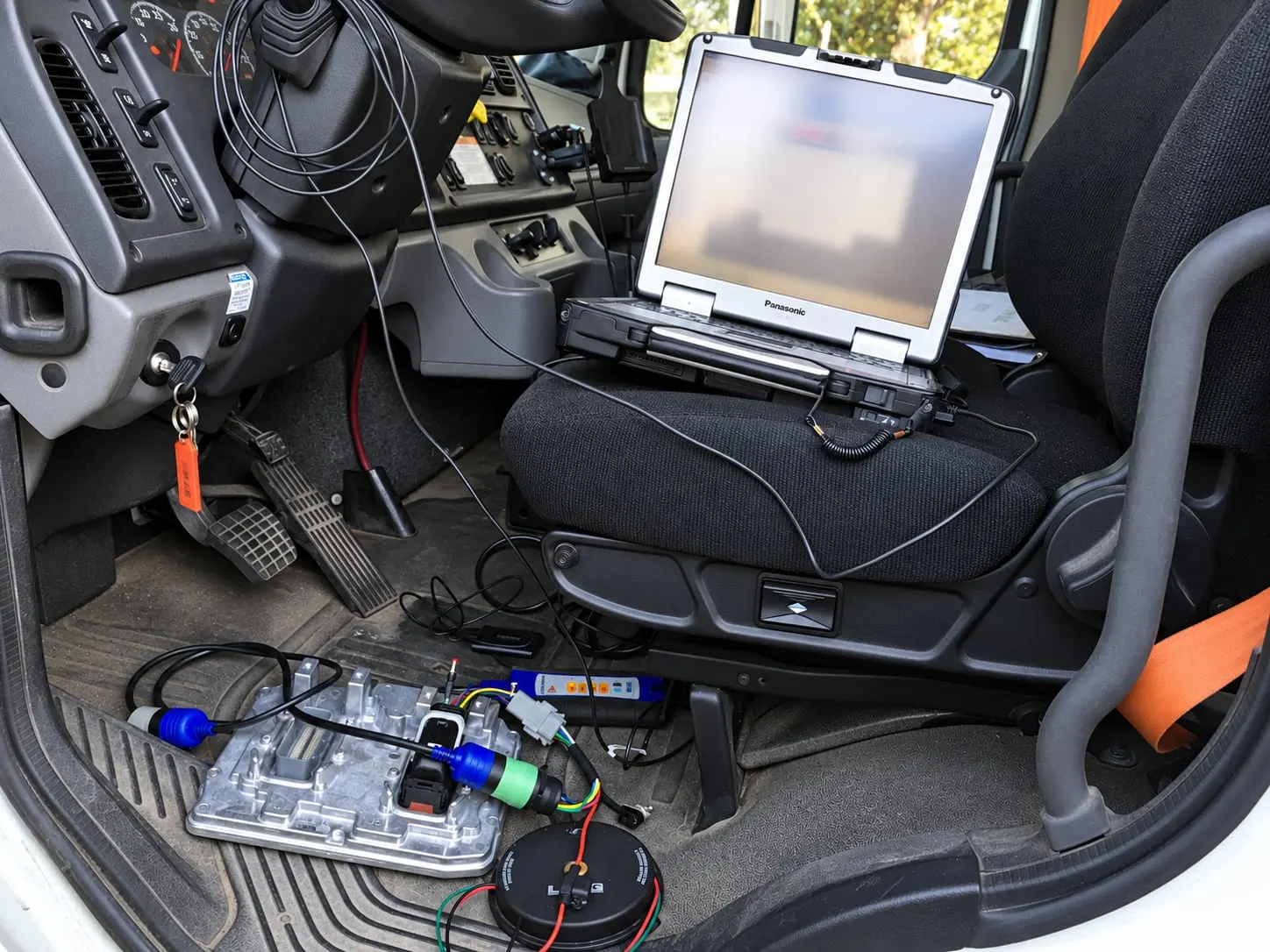
A modern diesel truck is a network of computers on wheels. Engine, transmission, aftertreatment, ABS and body modules all talk over a data network, and each of them depends on clean power, solid grounds and intact wiring. RDI Power traces electrical faults at our Brooksville shop on pickups, medium-duty trucks, tractors, buses and RVs.
What makes diesel electrical work different
- Heavy current: diesel pickups run 2 batteries, and heavy trucks run 3 or 4, feeding starters that draw far more current than a gas engine’s.
- Cold-start circuits: glow plugs or intake heaters pull high current for short periods, and their relays, controllers and harnesses fail.
- Emissions electronics: DEF heaters, NOx sensors and exhaust temperature sensors live in heat and road spray.
- Data networks: the J1939 network on heavy trucks and CAN networks on pickups carry messages between modules. A single bad module or connector can make others report faults.
- Upfits: service bodies, emergency lighting, lift gates and trailer circuits add wiring that was not there from the factory.
A code is a clue, not an answer
When a module sets a code for a sensor, it is saying the signal looked wrong. That can be the sensor, the wiring to it, the connector or the module itself. A MAP sensor code, for example, sends us to check the sensor’s reference voltage, ground and signal at the connector before anything is ordered. When codes do not make logical sense, such as a coolant sensor fault on an engine that is clearly at normal temperature with a working gauge, the module or its power supply moves up the list.
How we trace an electrical fault
- Recreate it. Heat, vibration, rain or a specific switch position often triggers the fault.
- Read the diagram. Factory wiring diagrams show where the circuit runs, what it shares and where its grounds are.
- Test under load. Voltage drop testing finds resistance that a simple continuity check misses.
- Check the network. Terminating resistance and module communication tell us whether the data network itself is healthy.
- Find the cause behind the cause. A melted harness means something let it touch the exhaust; a chewed wire means rodents got in. We fix the reason along with the wire.
Common causes in Florida
Humidity and salt air corrode connectors and grounds, especially on chassis harnesses. Rodents nest in engine compartments of trucks and RVs that sit. Harnesses shift onto hot exhaust parts after other repairs. Driving through standing water after summer storms pushes water into connectors. Aftermarket accessories tapped into factory circuits create drains and shorts.
Systems we cover
Charging, starting and battery circuits, covered on our alternator, starter and battery pages. Lighting, gauges and body controls. HVAC electrical controls. Engine and emissions sensors and modules, with full diagnosis on our computer diagnostics page. Trailer plugs and wiring. Tow and body controls on work trucks.
Electrical repairs we make
Repairs run from a fuse or a cleaned ground to rebuilt connectors, harness sections spliced and sealed, relays, sensors or a replaced module that gets programmed to the vehicle. Every repair gets documented with photos in your digital inspection, so you can see the corroded pin or the burned wire we found.
If your truck has a fault that comes and goes, note when it happens and what you were doing, then book a diagnosis. That detail shortens the hunt.