
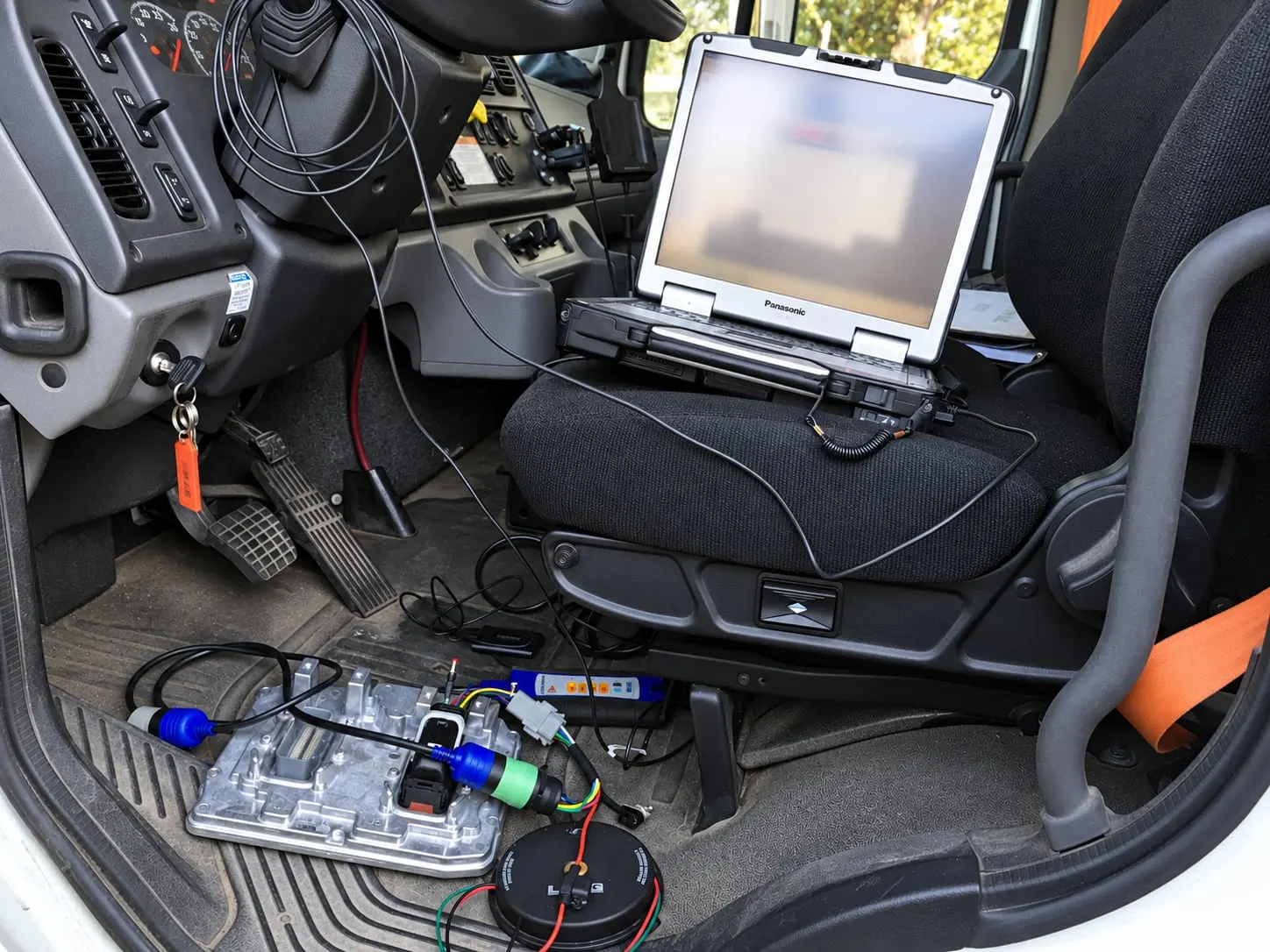
A check engine light on a diesel is the computer saying something is out of range. It might be a sensor reading wrong, a DEF problem that will eventually limit your speed, or the first sign of a fuel system failure. RDI Power diagnoses check engine lights at our Brooksville shop on pickups, vans, medium-duty trucks and Class 8 tractors, and we do it by finding the cause instead of clearing the code and hoping.
What the light can mean on a diesel
On pickups and vans, the check engine lamp works with separate warnings for the DPF, DEF and glow plugs. On heavy trucks, the dash has more to say:
| Lamp | What it usually means |
|---|---|
| Amber warning | A fault is active; get it checked soon |
| Red stop engine | A serious fault; stop safely as soon as you can |
| MIL | An emissions-related fault is stored |
| DPF lamp | Soot is building and a regen is needed |
| HEST lamp | Exhaust temperature is high, usually during a regen |
| DEF lamp | DEF is low, contaminated or the system has a fault |
The causes we find most on diesels
- NOx sensors before and after the SCR catalyst
- DEF problems: low level, wrong concentration, failed heaters, pumps or dosers
- DPF faults: high soot load, failed regens or a bad differential pressure sensor
- EGR faults: a sticking valve, a leaking cooler or a flow sensor reading wrong
- Fuel system: low rail pressure, injector balance problems, water in the fuel
- Boost leaks: split charge air boots and loose clamps
- Glow plug circuits on Power Stroke, Duramax and Sprinter engines
- Wiring: chafed harnesses and corroded connectors that make good parts look bad
What to do when it comes on
- Notice how the truck is running. Normal, rough, low on power or derated?
- Check for other lamps, especially a red stop lamp, high coolant temperature or low oil pressure.
- Write down any message or code the dash displays, and when it appeared: cold start, towing, idling, after fueling.
- If the truck is safe to drive, book a diagnosis. If it is not, fleet customers can call our 24/7 roadside assistance.
Why we do not just clear codes
A code that gets cleared without a repair comes back, and the freeze frame data that would have shown the conditions when it set is gone. Worse, some emissions faults start a countdown, and clearing the light does not stop the computer from tracking it. Parts-swapping by code number is how owners end up with 3 new sensors and the same light.
Finding the cause behind the light
We scan every module, review fault history and freeze frame data, and watch live data on a road test. Then we test the suspect part and its wiring directly. A NOx code gets the sensor readings compared against each other and against what the SCR should be doing. A rail pressure code gets fuel supply tested before the pump is blamed. Our computer diagnostics page explains the tools, and our exhaust and DPF page covers the most common source of emissions codes. For a real example, read why your Ford F-550 check engine light is on.
What happens next
You get a digital inspection with the codes, the test results and photos of what failed, plus a repair plan before any work starts. Bring the truck to Brooksville or ask about a mobile diagnosis at your yard.