
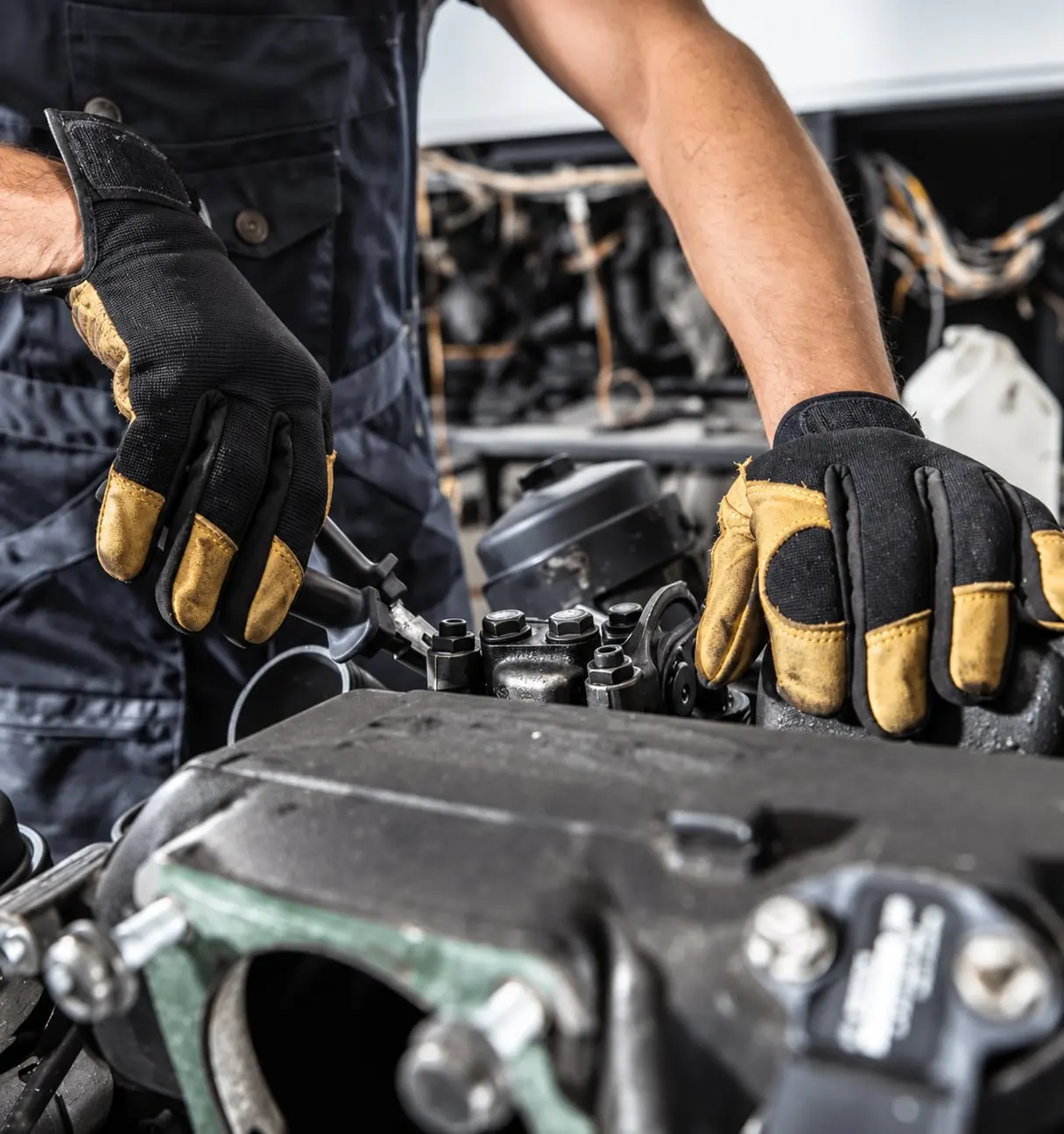
Almost every diesel truck and van on the road today is turbocharged, and the turbo works harder than any other part on the engine. It can spin past 100,000 rpm on exhaust heat, lives on a thin film of engine oil and shares the exhaust stream with the emissions system. RDI Power diagnoses and repairs turbochargers in Brooksville on pickups, Sprinter vans, RV diesel pushers and fleet trucks.
Turbocharger or supercharger
Both force more air into the engine, but they get their power differently.
- Turbocharger: driven by exhaust gas flowing through a turbine. It recovers energy that would otherwise go out the tailpipe, and on modern diesels it is tied into the emissions system.
- Supercharger: driven by the crankshaft through a belt or gears, so it costs engine power to run. Superchargers are rare on modern diesel trucks; you mainly find blowers on old 2-stroke Detroit engines.
Turbo types on the trucks we see
- Fixed geometry with a wastegate: common on older pickups and many heavy engines.
- Variable geometry (VGT): movable vanes change boost on demand. Used on Power Stroke engines from the 6.0 on, the 6.7 Cummins and Duramax engines from the LLY on.
- 2-stage systems: a small and a large turbo working together, as on the 6.4 Power Stroke.
Signs of turbo trouble
- Low power, slow spool or a boost code
- A new whistle, siren or grinding sound
- Blue smoke or oil in the intercooler pipes
- Black smoke under load
- Limp mode or derate, common on Sprinter vans with a boost leak
Why turbos fail
Turbos rarely die of old age. The usual causes are oil starvation from a restricted feed line, dirty or wrong oil, a blocked drain that pushes oil past the seals, dirt or debris entering through a leaking intake, and hot shutdowns after hard pulls. On emissions-era trucks, soot from EGR and a restricted DPF builds up in VGT vanes until they stick, and high exhaust backpressure adds heat and load. Fix the turbo without fixing those, and you are buying another turbo. Keeping oil clean matters here; see oil and lube service.
Turbo diagnosis, step by step
- Compare commanded boost to actual boost with a scan tool, and run actuator and vane sweep tests on VGT units.
- Pressure-test the charge air system to find leaking boots, clamps and coolers.
- Inspect the compressor and turbine wheels and check shaft play by hand.
- Check oil supply and drain, intake restriction and exhaust backpressure, including the condition of the exhaust and DPF system.
Turbo repair options
Depending on what we find: new charge air boots or clamps, an actuator, cleaning or replacing a sticking VGT mechanism, new oil feed and drain lines, or a new or remanufactured turbocharger. Exhaust manifold or up-pipe leaks upstream of the turbo get fixed at the same time; see manifold repair. Every turbo job ends with a road test and a boost check under load.
Fleet turbos
For fleets running Sprinter vans and delivery trucks, a boost leak caught at a PM is a cheap fix. A turbo that fails on a route is not. Sprinter van service and our fleet plans include charge air checks for that reason.
If your truck has lost power or gained a new noise, schedule a turbo diagnosis before it turns into a roadside call.