
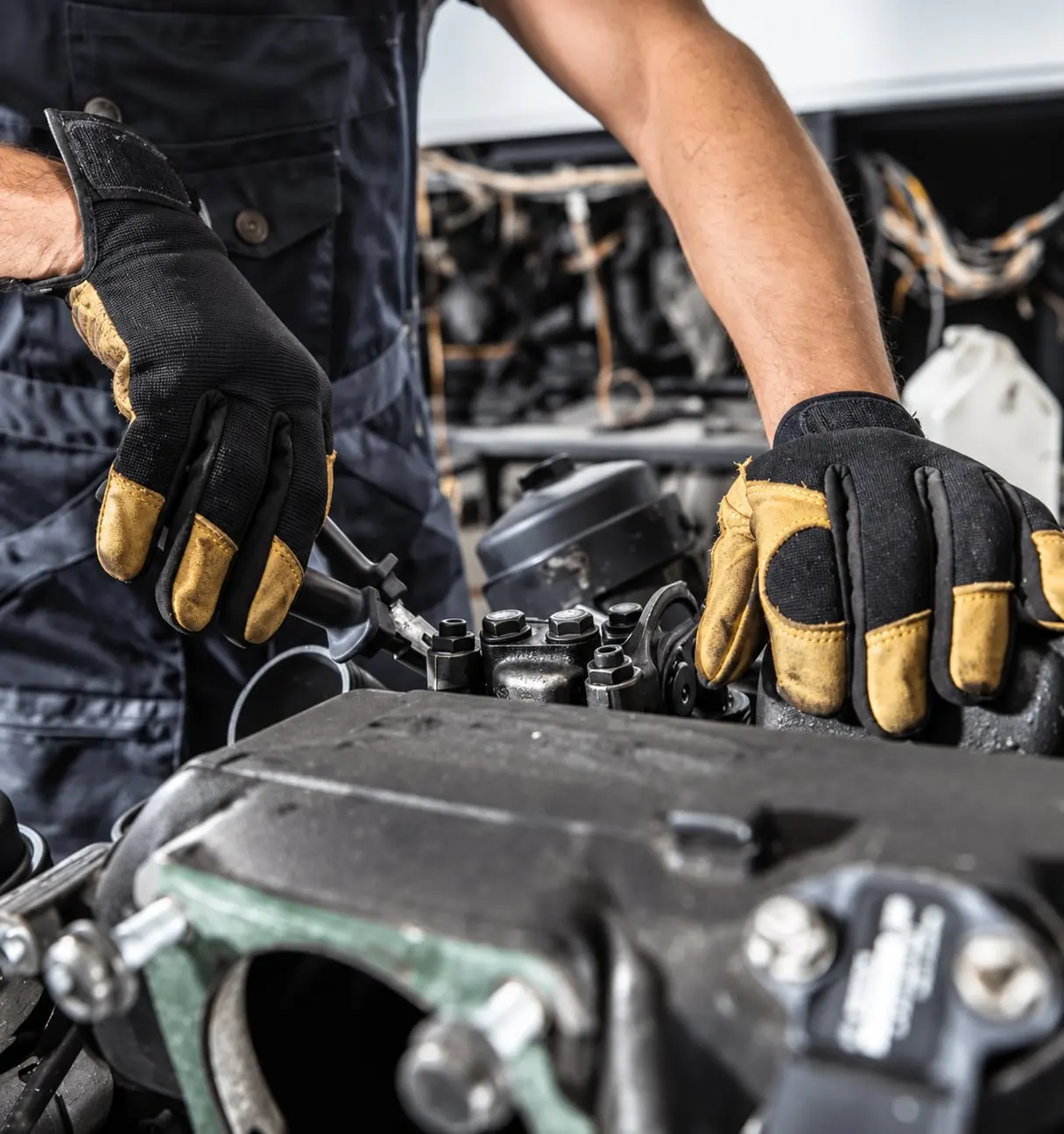
A diesel has 2 manifolds, and both take abuse. The exhaust manifold handles extreme heat cycles that crack castings and snap studs. The intake manifold handles boost pressure and, on emissions-era engines, a steady diet of EGR soot. RDI Power repairs both at our Brooksville shop, whether the engine sits in a pickup, a medium-duty truck or a tractor.
The exhaust side
The exhaust manifold bolts to the cylinder head and collects exhaust from each cylinder to feed the turbocharger. On some engines, up-pipes connect the manifolds to the turbo. Every time the engine heats up and cools down, these parts expand and contract, and over years that leads to:
- Broken studs or bolts, a well-known issue on Duramax engines and found on other platforms too
- Cracked or warped manifolds, seen on high-mileage Cummins and others
- Leaking up-pipes and gaskets, common on the 7.3 and 6.4 Power Stroke
- Blown gaskets from heat and vibration
Why an exhaust leak matters
An exhaust leak before the turbo steals the energy that spins it, so boost and power drop. Hot exhaust blowing on wiring, hoses and plastic parts damages them, and exhaust smell in the cab is a safety problem. Leaks also throw off exhaust temperature and pressure sensors that the emissions system depends on. See turbo repair and exhaust and DPF repair.
The intake side
On a direct-injection diesel, the intake manifold distributes only air, often under boost, to each intake port in the cylinder head. It also carries sensors, an intake throttle valve on many engines and sometimes a grid heater. Problems we see:
- Soot and oil buildup from EGR and crankcase ventilation, which restricts airflow on engines like the 6.7 Cummins and later Duramax engines
- Boost leaks from cracked plenums, worn gaskets or loose connections
- Grid heater problems on Cummins engines; our post on an intake upgrade for the 6.7 Cummins describes the factory grid heater concern
Manifold leak symptoms
- Ticking or puffing at cold start that fades as the engine warms
- Soot trails around the manifold or turbo connections
- Exhaust smell under the hood or in the cab
- Low boost, slow spool or lost power
- Melted wiring or hoses near the exhaust
- Exhaust temperature or boost codes
Finding manifold leaks
We listen at cold start, when manifold leaks are loudest, and look for soot trails at joints. A smoke test or boost leak test pressurizes the intake side to find leaks. We check every stud and bolt, measure manifold flatness when a casting is suspect, and look at nearby wiring for heat damage. On EGR engines with intake restriction, we inspect the EGR system and crankcase ventilation that feed the buildup.
Manifold repairs
- Extracting broken studs and bolts, often without removing the cylinder head
- Resurfacing or replacing warped and cracked manifolds
- New gaskets, studs, and up-pipes or bellows
- Cleaning soot from the intake manifold, throttle valve and passages
- Repairing heat-damaged wiring and hoses; see electrical repair
Platform specifics are on our Duramax, Cummins and Power Stroke pages.
If your diesel ticks at startup or smells of exhaust, bring it in before a small leak turns into broken studs and burned wiring.