
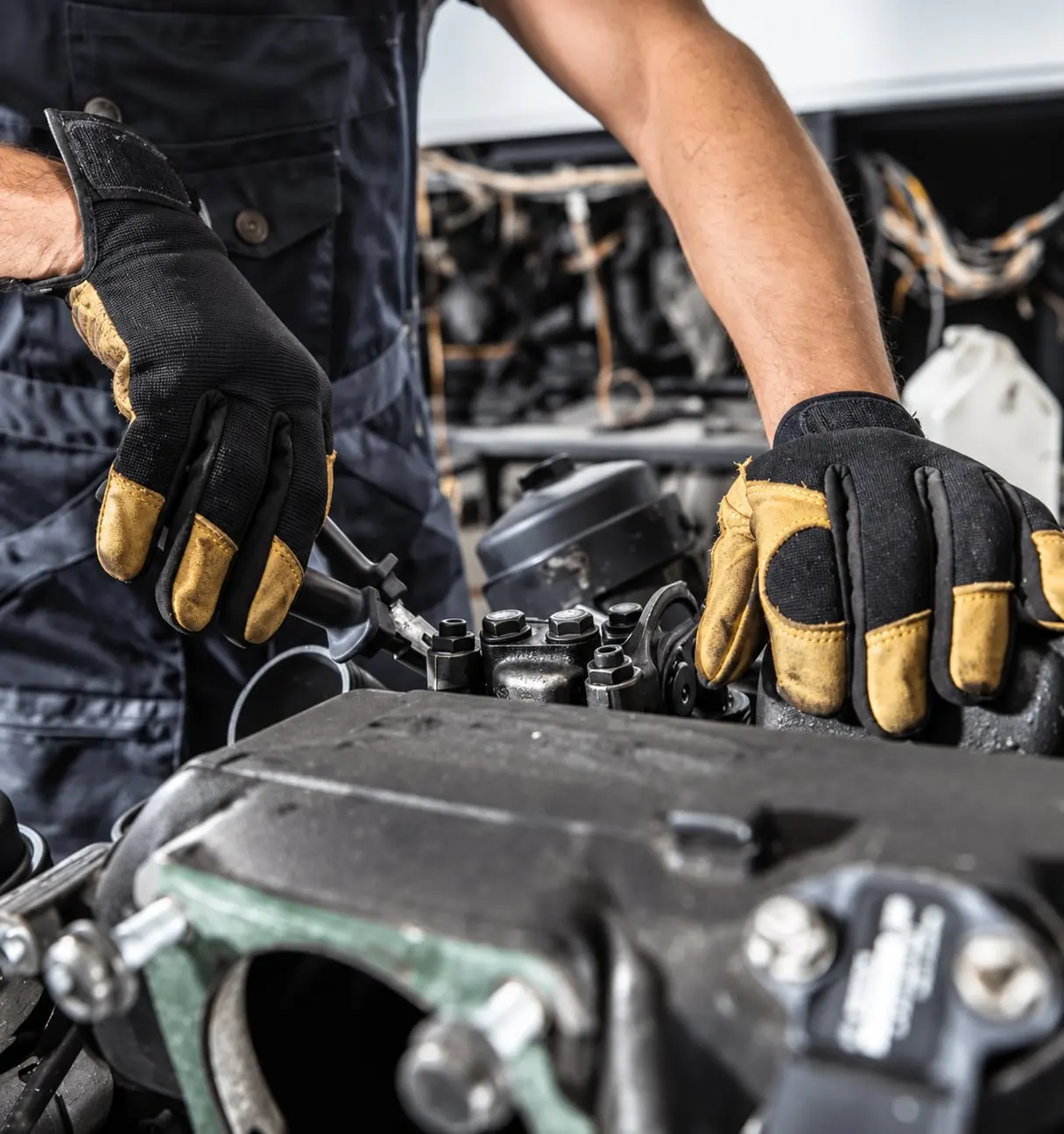
Diesel engine oil has a harder job than oil in a gas engine. It carries soot from combustion, handles higher cylinder pressures and keeps tight tolerances lubricated under heavy load and heat. Let it get old, dirty or low, and wear accelerates fast. RDI Power performs diesel oil changes and chassis lubrication in Brooksville on pickups, vans, medium-duty trucks, tractors and RVs.
When to change it
Your engine maker publishes 2 kinds of intervals: normal service and severe service. Severe service covers towing, long idle hours, short trips, stop-and-go routes and dusty or gravel roads. In Central Florida, heat and idling put many work trucks in that category. Many newer pickups calculate oil life from how the engine has been run; follow the reminder, and do not stretch it.
Choosing the oil
- API CK-4: the current heavy-duty diesel category, suitable for most diesel engines on the road.
- API FA-4: a lower-viscosity category for newer engines whose manufacturer approves it. It is not a drop-in for older engines.
- Manufacturer specs: Cummins, Ford, GM, Detroit and others publish their own approvals. We match oil to the spec your engine calls for.
What happens at the service
- Drain the oil hot and inspect it for fuel smell, coolant, metal or unusual soot.
- Replace the oil filter, and fuel filters when they are due.
- Refill with diesel-rated oil to the correct level for that engine.
- Grease every fitting on the chassis and driveline.
- Inspect the vehicle for leaks and wear.
- Top off fluids, and replace the engine air filter if it is restricted and you approve.
Chassis lube points
On heavy trucks and many medium-duty trucks, grease is a maintenance item, not an afterthought:
- Kingpins and steering linkage on steer axles
- U-joints and slip yokes on the driveshaft; see driveshaft repair
- Slack adjusters and S-cam bushings on air brakes
- Spring pins and shackles on leaf suspensions
- Fifth wheel plates and locks on tractors; see hitches and fifth wheels
Many late-model pickups have sealed joints, but older trucks and most commercial chassis still have fittings that wear out quickly when dry.
What we look for while it is on the lift
Leaks from the engine, transmission, axles, steering, brakes and cooling system. Steering and suspension wear. Tire tread and uneven wear. Brake pad and rotor condition. Belts, hoses, idler and tensioner pulleys. Hydraulic hoses that are cracking or dry-rotted. Findings go into a digital inspection with photos.
What used oil can tell us
Rising oil level or a fuel smell can mean fuel dilution from an injector or from repeated regens. Milky oil means coolant, which on some engines points to an oil cooler or EGR cooler. Heavy soot loading points back to the fuel or air system. Leaks have patterns too; our post on oil leaks on the 6.7 Power Stroke covers a common example.
For fleets
Oil service is the backbone of any maintenance plan. RDI Fleet and our preventive maintenance service schedule it around your units so it happens on time, every time.
Book an oil and lube visit, and let us know if you want anything else done while the truck is here, such as coolant, transmission fluid or brake fluid service.