
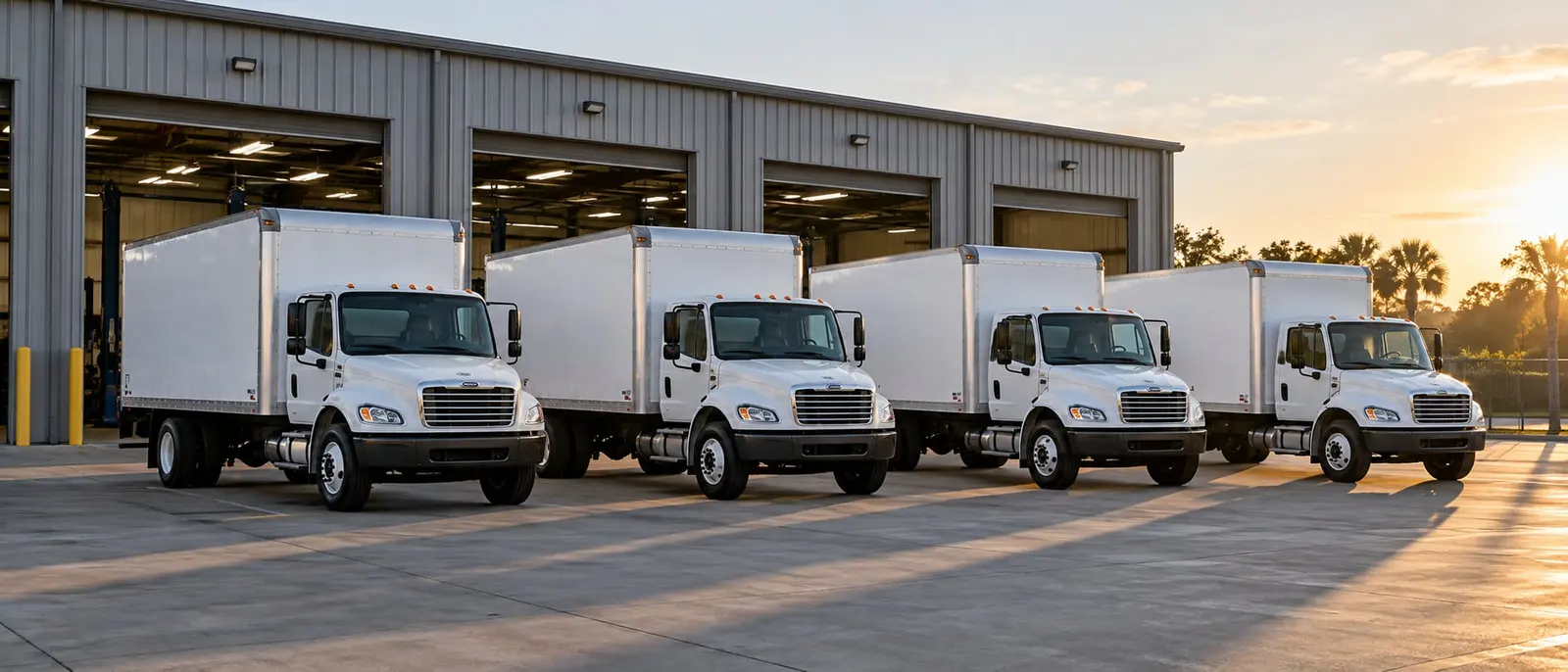
DeLand makes things. Team Volusia lists 3 manufacturers in 3 different trades here: Country Pure Foods in food, Kingspan in building products and Mystic Powerboats in boats. The city is also the Volusia County seat, it contracts its garbage, yard waste and recycling collection to GFL Environmental, and its municipal airport has an industrial park built partly in old military buildings. A fleet working in that mix can have units doing very different jobs, and an RDI Fleet plan is written around each of them.
A DeLand plan starts with what each truck does
Before anyone sets an interval, we find out how your trucks actually spend the day. A box truck making short runs between the airport industrial park and Woodland Boulevard brakes constantly and rarely gets warm enough to keep its DPF clean. A tractor heading east on US 92 or out I-4 piles up highway miles at a steady load. A crew pickup that idles on a job site while the tools run adds engine hours with almost no odometer to show for it. Trucks working SR 15A share it with heavy traffic: FDOT counts trucks at 22.5% of vehicles there. Each of those deserves its own schedule, even when all 4 park in the same DeLand yard every night.
So the first conversation covers the roster (year, make, engine, miles or hours), the duty cycle, the budget you want to plan to, and the calendar: when units can come out of service and when each annual inspection falls due.
Booking DeLand yard visits from Brooksville
RDI technicians come out from our Brooksville shop, so every DeLand visit is planned in advance. We group units so one trip covers as much of the fleet as possible, and we schedule around the hours your trucks are parked rather than the hours they earn. Heavier work, such as an engine overhaul or a transmission rebuild, goes on the calendar for the Brooksville bays with enough lead time to cover the route while that unit is gone.
What a DeLand PM visit checks
A preventive maintenance visit is more than an oil change. On each unit, the technician works through:
- Oil and filter service, with a look at the drained oil for anything unusual
- Fuel filters and the water separator
- Air filter condition and the intake tract for leaks
- Coolant strength, belts, hoses and the radiator
- Brake linings measured; on air-brake trucks, adjustment and leak checks
- Tread depth, pressure and wear pattern on every tire
- Steering, suspension and chassis grease points
- Batteries, charging output and starting
- DPF, DEF and EGR condition
- Stored and pending fault codes
- Leaks at the engine, transmission, axles and hydraulics
Our guide to fleet diesel engine maintenance goes deeper on why each item matters.
Buses, trailers and service bodies on a DeLand roster
If your DeLand roster mixes vehicle types, the plan handles each one on its own terms. A shuttle or small bus gets the passenger-side items on top of the engine work: brakes on a tighter schedule, doors, suspension, and an electrical system carrying more load than any pickup’s. Trailers get their own line for brakes, wheel bearings, lights, wiring and tires, timed to the tractor’s visit when truck and trailer run as a pair. Upfitted service trucks get the chassis treated like any other unit, plus a note on accessory loads that drain batteries or keep the engine idling through the day. However mixed the yard, it stays one account, one calendar and one set of reports.
Annual inspections for DeLand trucks on I-4 and US 17
Commercial vehicles with a GVWR of 10,001 pounds or more in interstate service need an annual inspection, and the report must be kept for 14 months; daily pre-trip checks remain the driver’s job. On the plan, each annual is booked with that unit’s PM so it leaves service once. Anything that fails is photographed and written up, and once you approve, it is repaired. Our DOT inspections page walks through each checkpoint on inspection day.
Reports, priority and the fleet warranty for DeLand accounts
Each DeLand visit produces a digital inspection with photos and technician notes, and those reports add up to a service history per unit. Findings are sorted into what needs attention now and what can wait for a planned visit, which is how maintenance spending becomes predictable. Fleet units get priority service when something breaks between visits, repairs carry a 2-year / 24,000-mile fleet warranty, and 24/7 roadside covers nights and weekends.
For breakdowns, see mobile diesel repair in DeLand. Operators with yards on the other side of I-4 can read about Deltona fleet maintenance, and the program itself is explained on our fleet maintenance page. A call to (352) 433-3800 with a rough unit list is the place to start.