
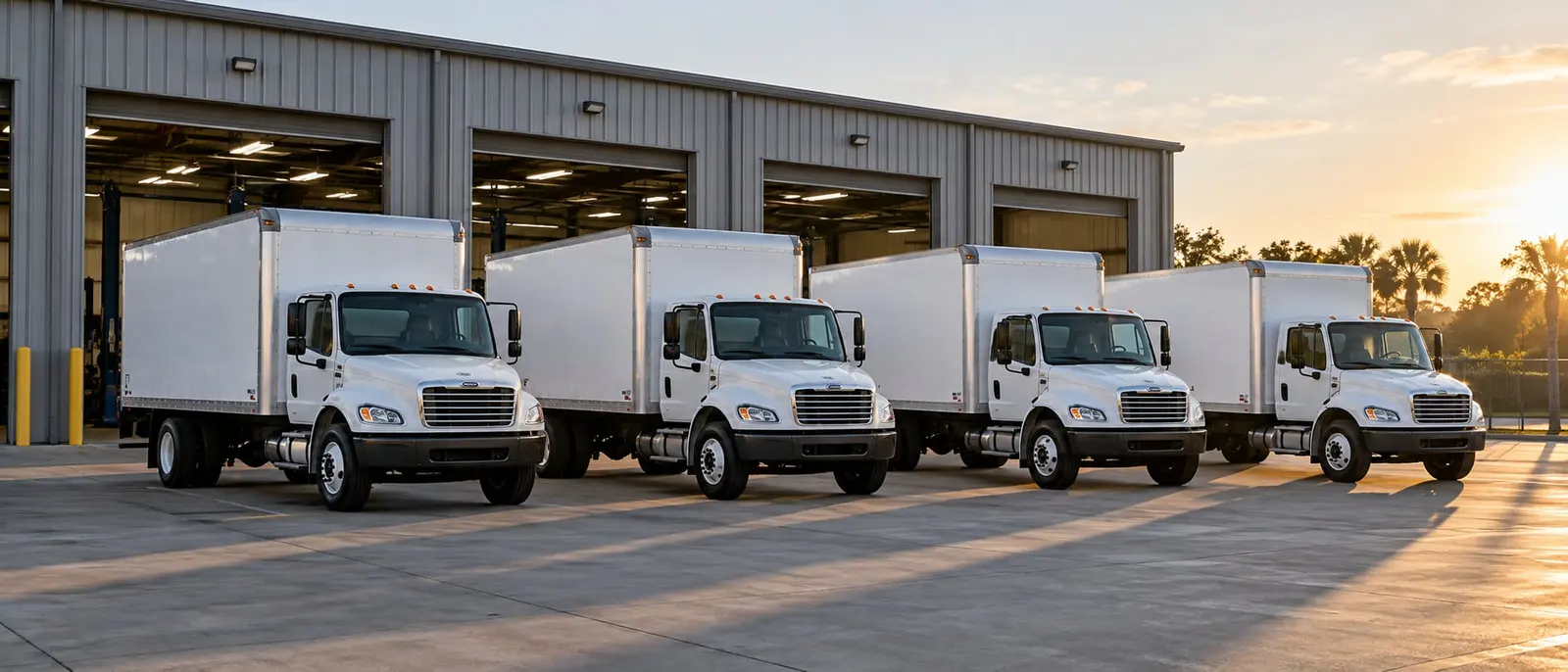
Limerock and aggregate pits are part of the working landscape in Hernando and Citrus counties, and the rock they produce ends up in road base, concrete and building pads across Central Florida. Every ton of it rides on a truck at some point. RDI Power maintains and repairs the trucks that haul rock and support the pits, in our Brooksville shop and on-site.
The trucks that move rock
- Tri-axle dump trucks, end dumps and belly dumps hauling to job sites and plants
- Tractors pulling dump trailers
- Water trucks keeping haul roads down
- Fuel and lube trucks and mechanics’ service trucks
- Lowboys moving loaders and excavators between sites
- Pickups and crew trucks
Many pits also run off-road haul trucks and loaders. For those machines, call with the make, model and engine. We will tell you honestly whether the job fits our shop.
What limerock does to a truck
Dust
Limerock dust is fine, white and abrasive. It packs radiators and charge air coolers, cakes on brake parts and finds any gap in the intake. A cracked intake boot or a loose clamp downstream of the air filter lets that dust straight into the engine, where it wears rings and cylinders in a hurry. Cleaning the cooling stack and checking every inch of intake piping is standard on a pit truck. See radiators and cooling.
Loads
Pit trucks run at or near their limits all day. Springs, hangers, U-bolts, frame rails, fifth wheels and tires see it first. Frame cracks near spring hangers and body mounts are worth catching while they are short.
Haul roads
Rutted, wet or washboard pit roads pound suspension and steering, cut tires and shake loose anything bolted on. Shocks, bushings and torque rods wear faster than on a highway truck. See shocks and suspension.
Brakes
Loaded stops plus dust is a hard combination for brake linings and slack adjusters. Air leaks from fittings shaken loose on rough roads are common.
Low-speed work
Water trucks and trucks that shuttle inside the pit rarely run hot enough for their particulate filters to clean themselves, which brings more regens and derates.
Keeping a pit fleet running with RDI Fleet
- Service intervals set by conditions. Air filter and cooling system service follows what the inspections show, not just the calendar.
- Intake and cooling checks at every PM. Piping, clamps, boots and the cooling stack get a hands-on look.
- On-site service at the pit or the yard through mobile diesel repair: PM, diagnostics and many repairs without pulling a truck off the haul.
- Annual DOT inspections for road-going trucks and trailers, where brakes, frames and suspensions get the closest look. See DOT inspections.
- Photo records. Digital inspection photos of frame cracks, leaks and worn parts go into each unit’s history.
Caterpillar engines are familiar ground here. RDI Power is Caterpillar certified, and our team works on Cat truck engines including the 3406. See Caterpillar engine repair and our article on common Caterpillar 3406 PEEC engine issues. For a pit fleet, all of this runs through a single RDI Fleet maintenance plan.
Why downtime matters in a pit
A pit runs on loads per hour. When a truck is down, the loader waits or the stockpile grows, and somewhere a job site is short of the rock it ordered for the day. Haulers paid by the load lose income for every load they do not haul. Keeping trucks in rotation is the whole business, and planned maintenance is how you keep them there. A frame crack or a weeping hub seal found during a PM is a scheduled repair on a slow afternoon. The same problem found on a loaded haul is a tow, a missed load count and sometimes a damaged load of rock on the road.
Keep the rock moving
Tell us what you haul and how many trucks work the pit. We will match maintenance to the dust and the loads, and come out when a truck stops.