
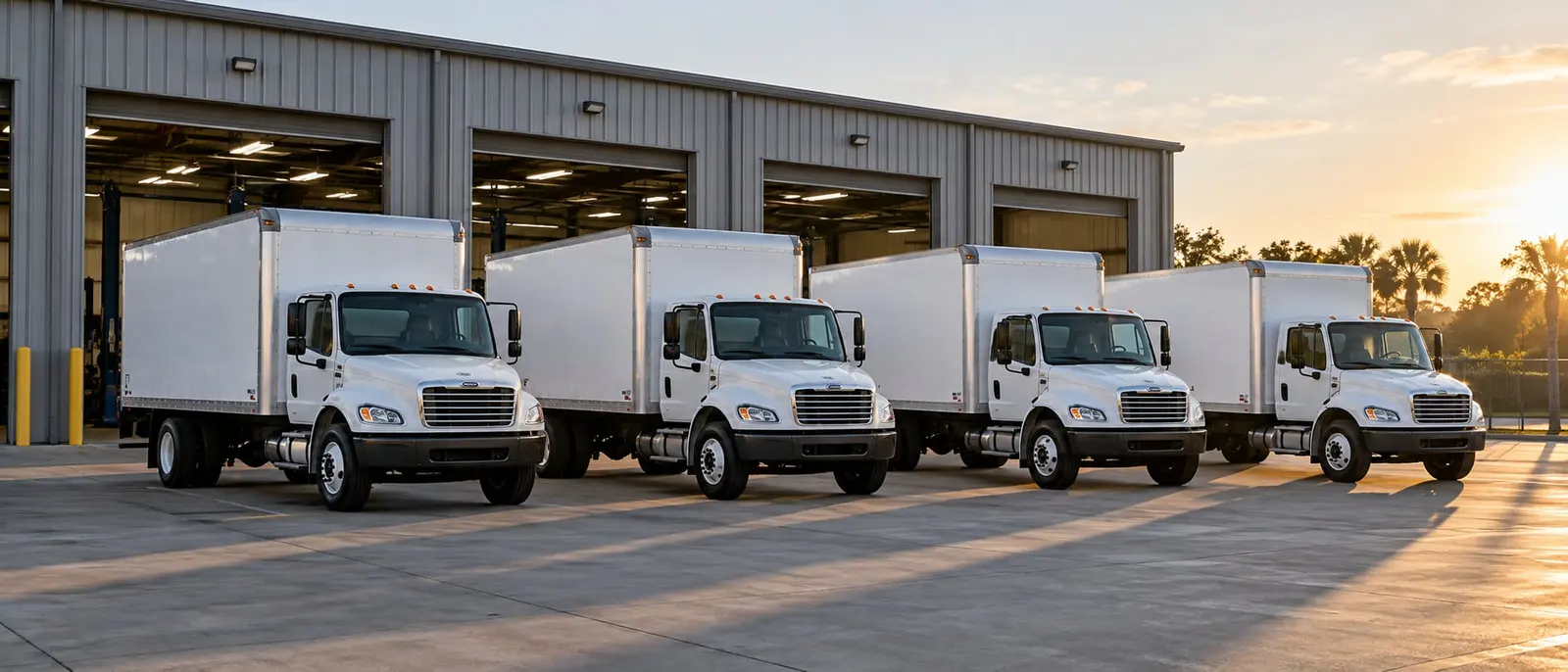
Brooksville sits between I-75 and US-19, with the Suncoast Parkway and SR-50 crossing Hernando County, which puts RDI Power close to the freight lanes on Florida’s west side. For carriers, owner-operators and delivery fleets, a shop’s job is simple to describe and hard to do: diagnose the problem right, fix it once, and keep the trucks on schedule and the miles coming.
What transportation fleets run
- Tractors. Over-the-road and regional trucks from Freightliner, Peterbilt, Kenworth, Mack, Volvo, International and Western Star, with Cummins, Detroit, Caterpillar and Volvo engines. See heavy-duty truck repair.
- Trailers. Dry vans, reefers, flatbeds and drop decks.
- Box trucks. Medium duty delivery and distribution trucks.
- Vans. Diesel Sprinter vans running last-mile routes. See Sprinter vans.
- Hotshot rigs. Heavy duty pickups and cab-and-chassis trucks pulling gooseneck and flatbed trailers.
Where highway trucks fail
Aftertreatment
DPF, DEF dosing and SCR systems cause much of the unplanned downtime on late-model trucks. A failed NOx sensor, a crystallized DEF injector or a plugged filter can put a truck into derate miles from home. The fix starts with finding why, which can be anything from an injector problem upstream to a wiring fault.
Fuel injection
Injectors and high-pressure pumps live and die by fuel quality and filter changes. Water in fuel and skipped filters shorten their lives. See fuel injection and our article on why diesel fuel injectors fail.
Cooling and heat
Florida heat, heavy loads and long idle times with the air conditioning running push cooling systems hard. Fan clutches, radiators, charge air coolers and hoses are summer failure points.
Brakes, bearings and tires
Highway miles wear brakes and heat up wheel bearings, especially on trailers that nobody looks at between inspections. Tires wear faster when alignment is off and pressures are low.
Trailer electrical
Corroded connectors, chafed wiring and broken lamps are among the most common reasons a trailer gets written up at a roadside inspection. See trailer repair.
How RDI Fleet supports a transportation operation
- Mileage-based PM scheduled around dispatch, so trucks come in on home time or slow days instead of in the middle of a run
- Priority scheduling in the shop for fleet units
- 24/7 roadside assistance for fleet accounts on I-75, US-19, the Suncoast and SR-50. See roadside assistance
- Annual DOT inspections for every tractor and trailer, lined up with PM. See DOT inspections
- Digital inspection records for each unit, plus the 2-year/24,000-mile RDI Fleet warranty on repairs
Owner-operators get the same approach in the shop: real diagnosis first, root cause fixed once, and photos of what we found before you approve a repair. Carriers that want the whole program, from PM schedules to after-hours roadside, can start with an RDI Fleet plan.
Put driver reports to work
Drivers notice problems first: a soft brake pedal, a new vibration at highway speed, a turbo that sounds different, a regen that seems to run every day. Those write-ups are the cheapest diagnostic information a fleet has. Send them with the truck, or ahead of a PM visit, and the technician starts with a lead instead of a blank screen. On a digital inspection, we note what we found against each complaint, so the driver and the dispatcher both know it was handled.
Why downtime matters in transportation
A tractor that is down is a load not delivered, an appointment missed and a driver not earning. Customers do not move their receiving windows because a truck broke, and a missed delivery can cost more in the relationship than the repair costs in the shop. For a small carrier, a single truck out of service can be a large share of the week’s revenue. That is why the cheapest repair is usually the repair planned during PM, before the truck ever leaves the yard with a problem.
Keep the freight moving
Tell us what you run and how your trucks are dispatched. We will build maintenance around your schedule, and when a truck goes down, we will diagnose it right the first time.