
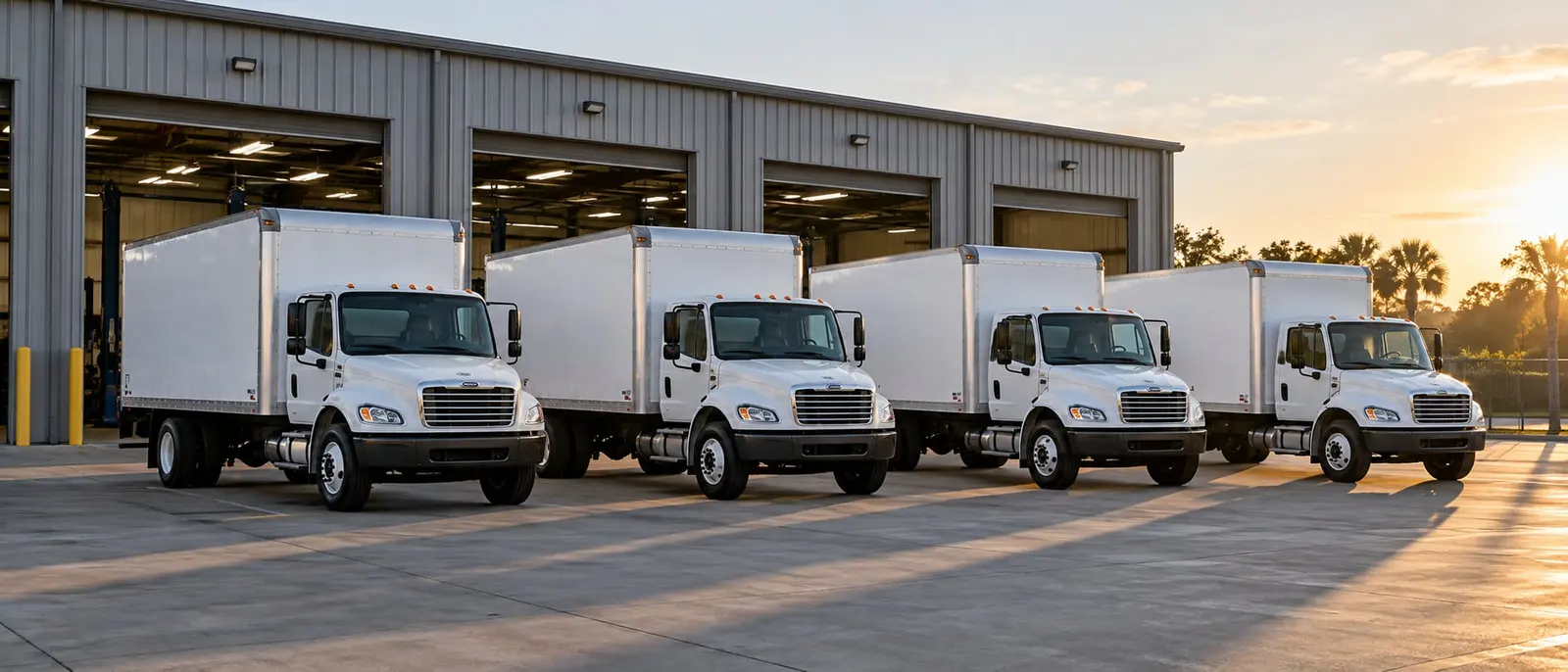
Fort Meade has been here since 1849, longer than any other city in Polk County, and mining has shaped the land around it. Mosaic lists a mine named Fort Meade among its active phosphate mines, and the Streamsong resort was built nearby on former strip-mined land. Florida’s Department of Environmental Protection counts 28 phosphate mines in the state, 11 of them active, with Bone Valley mining concentrated in Polk, Hillsborough, Manatee and Hardee counties. US 17, where about 1 vehicle in 5 is a truck through town, connects Fort Meade north to Bartow and south to Wauchula. For a fleet working out of this corner of the county, RDI Fleet, RDI Power’s fleet program, means maintenance on a plan, done where the trucks park.
Fort Meade yard visits, planned to make every trip count
RDI Power has no shop in Polk County, and Fort Meade is a long way south of the one we have in Brooksville. That distance is exactly why a fleet here benefits from planning. Instead of reacting to each breakdown with a tow, a Fort Meade plan books technician visits ahead, groups the units that are due, and combines PM, annual DOT inspections and known repairs into the same trip. A truck that needs oil and filters, a brake measurement and its yearly inspection gets all 3 in 1 visit.
When a job truly needs the shop, such as an engine coming apart or a transmission coming out, we schedule it so the truck leaves Fort Meade once, with the diagnosis already done and the parts ordered.
Setting intervals for Fort Meade vocational and highway trucks
The trucks in a southern Polk fleet do not all work the same way, so their maintenance should not run on the same clock:
- Highway units on US 17 and US 98 collect miles, and their PM follows the odometer.
- Vocational trucks that idle, run hydraulics or haul short distances collect engine hours instead, and hours set their PM.
- Trucks working unpaved ground get more frequent air filter and intake checks, and closer looks at suspension and steering.
- Units that sit between jobs are serviced on the calendar so fuel, batteries and seals do not degrade unnoticed.
Our mining page covers the trucks that work around pits and aggregate operations, and the same planning applies to them.
Cooling systems get special attention on trucks that work through a southern Polk summer. Radiator fins packed with dust, a weak fan clutch and hoses gone soft all show up on inspection well before the temperature gauge climbs, and catching them in the yard is far cheaper than a tow from US 17. Coolant condition is tested too, since old coolant loses its protection long before it looks dirty.
Preparing for the first Fort Meade visit
The first visit sets the baseline, so it pays to have a few things ready. A unit list helps most: year, make, engine, VIN, and the current mileage or hour reading for each truck and trailer. Add any recent repair history you have, the problems drivers have been reporting, and the annual inspection due dates you already know. If that list does not exist yet, the technician builds it during the walk-around.
The yard itself matters too. A paved or hard-packed area where the service truck can park beside each unit, keys and gate access, and a contact who can answer questions all keep the visit moving. Soft ground after a summer storm is no place to set up jacks, so tell us if the yard is unpaved.
Heavy engines are routine work for us. RDI Power is Caterpillar certified, and Cummins, Detroit and Volvo power are regular jobs. On the light duty side, Ford IDS and WiTECH give dealer-level access to Power Stroke and Ram pickups.
What Fort Meade fleet managers get on paper
Every visit leaves a photo inspection report for each unit the technician touched, with notes and a list of what is coming due. Over time, those reports form a service history for every truck, which is the evidence you need when deciding whether to keep repairing an older unit or replace it. Each unit’s annual inspection date sits on the same calendar as its PM, and our DOT inspections page explains what the inspection includes.
Fort Meade fleet warranty and round-the-clock roadside
Repairs completed under an RDI Fleet account are covered by a fleet warranty of 2 years or 24,000 miles. Fleet accounts get priority service when a unit fails between visits, and roadside help is available 24/7 at (352) 433-3800, so a truck that stops on US 17 after dark still has someone to call.
The program as a whole, from onboarding to reporting, is set out on RDI Fleet maintenance. For breakdowns, see Fort Meade mobile diesel repair, and for operations east along US 98, fleet maintenance in Frostproof.