
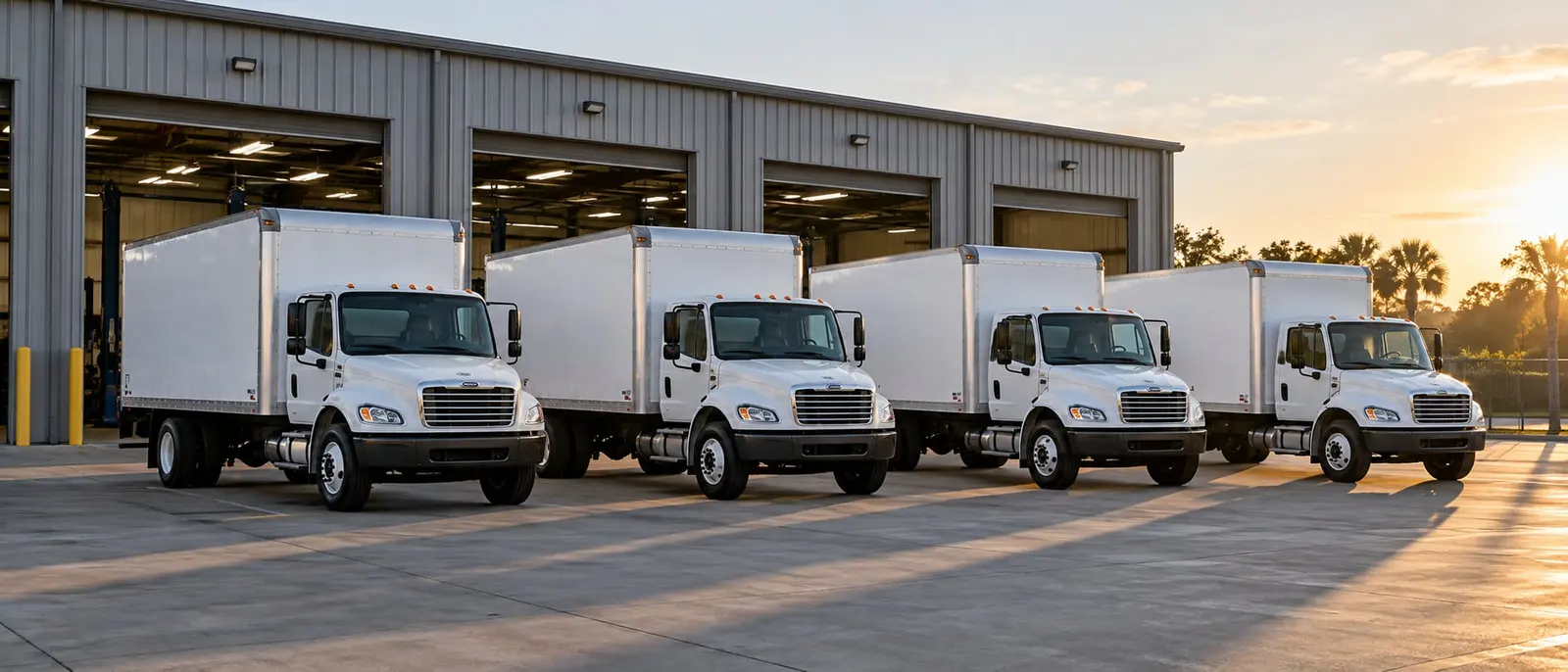
Roughly 44.5 miles of streets, 40 miles of sewer line and 55 miles of water line: that is the network the City of South Daytona maintains. Volusia County’s transit system, Votran, also operates out of the county’s Mobility Management Center in South Daytona, and countywide it runs 69 fixed-route buses, 56 paratransit vehicles and about 20 service and support vehicles, with operations and maintenance handled under contract by RATPDev USA. For a city of fewer than 14,000 people, that is a lot of public-service fleet activity in one place. RDI Fleet brings planned maintenance to South Daytona operators of any size, with technicians coming out from our Brooksville shop on a booked schedule.
Public works mileage and South Daytona service trucks
Trucks that support road, sewer and water work do short hops, long idles and plenty of PTO time. None of that shows up on an odometer, but all of it shows up in the oil, the brakes and the exhaust aftertreatment. If you run service bodies, dump trucks or utility trucks in and around South Daytona, the plan sets their intervals on engine hours as well as miles, measures brakes on every visit, and checks the DPF and DEF system before a loaded filter forces a derate on a job. Cooling systems get a close look too, because a truck that idles in Florida heat with its accessories running leans hard on its radiator and fan.
Buses and vans on a South Daytona plan
People-moving fleets have their own priorities. A bus or a paratransit-style van runs on a timetable, so its maintenance belongs on the calendar rather than the odometer, landing before the busy stretch instead of during it. Brakes get checked on a tighter cycle, along with suspension, doors and an electrical system that carries more load than a truck’s. Our bus service and repair page goes into more detail on that work. Whatever the mix, buses, vans, pickups and trucks sit on one account with one schedule.
Small South Daytona fleets on the same footing
If your South Daytona operation runs 2 or 3 trucks rather than 30, the program is built for you too. Plans are sized to the South Daytona fleet you actually run. A contractor with a pair of pickups and a dump truck gets the same photo inspections, the same priority when something breaks and the same fleet warranty as a large yard, with a schedule that fits a handful of units. For a small operation, the value is often in the records: one missed oil change on one truck is a bigger share of the business than it is for a big fleet.
Scheduling South Daytona yard visits
South Daytona sits near the outer edge of the area RDI covers from Brooksville, which makes planning the whole game. Visits are booked well ahead, grouped so a single trip handles every unit that is due, and timed for the hours your vehicles are parked. Each unit gets the service it is due and a digital inspection; approved repairs that do not need a lift are done before the technician leaves. Overhauls, transmission rebuilds and alignments are scheduled into the Brooksville bays, far enough out that you can plan around the missing unit.
A yard visit gets more done with 2 habits in place: keep a running list of driver complaints for each unit, and park the trucks with room to work around them.
South Daytona records, warranty and fleet roadside
The photos and notes from each visit build a service history per unit. For interstate commercial vehicles with a GVWR of 10,001 pounds or more, the annual inspection report kept on file for 14 months sits alongside that history, and the inspection itself is booked with PM. Drivers still own their daily pre-trip.
Repairs done on the fleet account are warrantied for 2 years or 24,000 miles. Fleet units get priority service if something breaks between visits, and 24/7 roadside assistance means a breakdown on Beville Road after hours is still handled.
When a South Daytona unit stops without warning, see South Daytona mobile diesel repair. Neighbors to the north on Nova Road can read Holly Hill fleet maintenance, and the full program is on fleet maintenance. A South Daytona plan starts with a call to (352) 433-3800.