
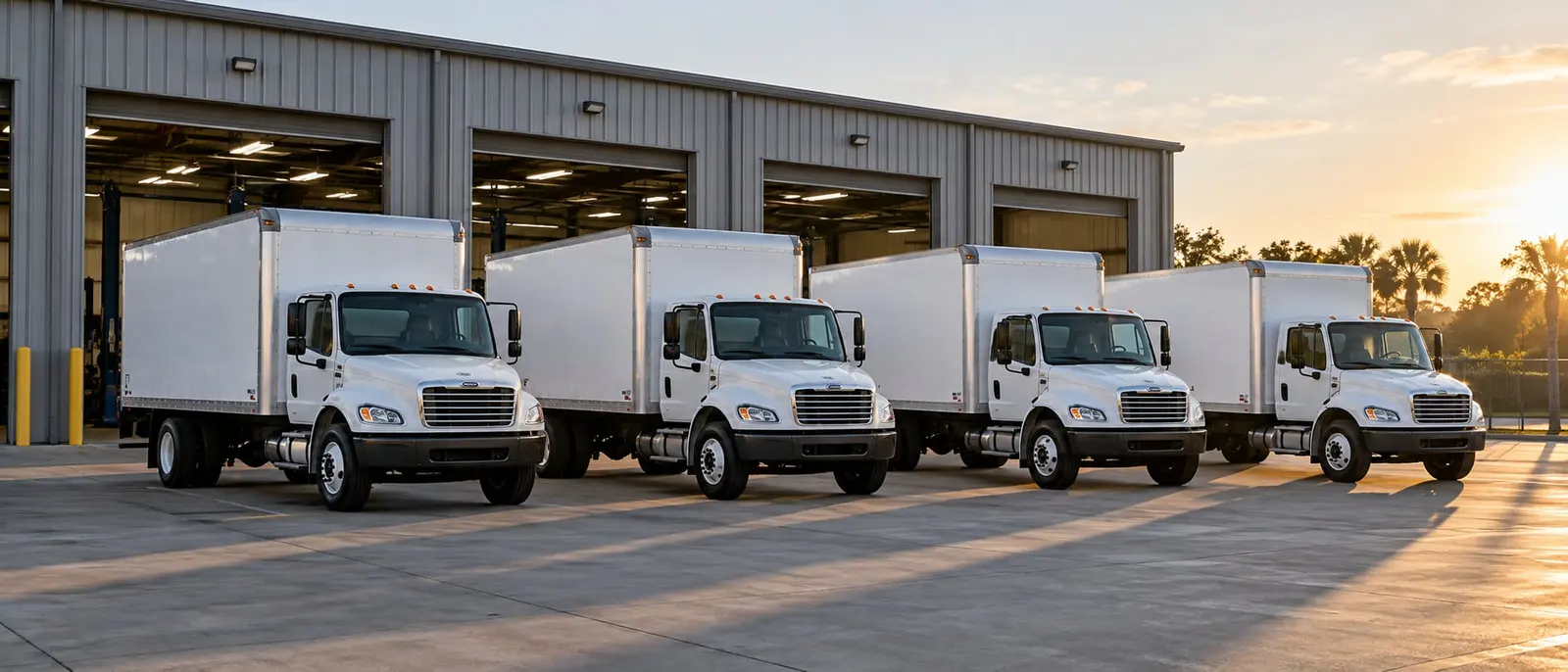
Lifting work is done from a truck. Boom trucks setting trusses, bucket trucks working lines and trees, digger derricks setting poles, rollbacks and wreckers lifting vehicles, and trucks carrying piggyback forklifts to job sites all depend on a truck that gets them there and powers the lift once they arrive. RDI Power maintains and repairs those trucks from our Brooksville shop and on-site, for contractors and fleets across Hernando, Pasco and Citrus counties.
Lifting trucks we work on
- Boom trucks and knuckle boom cranes on medium and heavy duty chassis
- Bucket trucks for utility, tree and sign work
- Digger derricks
- Rollbacks and wreckers
- Trucks that carry piggyback forklifts
Chassis range from Ford Super Duty and medium duty trucks to Freightliner, International, Peterbilt and Kenworth, with Power Stroke, Cummins and other diesels. See heavy-duty truck repair.
Where the truck lets down the lift
PTO and pump drive
Most lifting bodies get their power from a PTO off the transmission, driving a hydraulic pump directly or through a short driveshaft. Worn PTO gears, failed engagement, leaking seals, loose mounting and worn U-joints stop the lift even when the engine is fine. See drivelines.
Transmission heat
Running a PTO for long periods adds heat to an automatic transmission, and a lifting truck may do that for most of a shift. Fluid that runs hot breaks down early. Transmission fluid and filter service on an hours-based schedule, and a check of fluid condition at every PM, protect the part the whole lift depends on.
Stationary engine hours
A boom or bucket truck may run for hours at a job site with the odometer barely moving. Those hours count toward wear, and the low-load idle keeps exhaust temperatures down, so particulate filters load and regenerations get interrupted.
Electrical systems
PTO switches, outrigger and boom interlocks, beacons and work lights all depend on clean power and good grounds. A weak alternator or a corroded ground can show up as an interlock that will not clear or a PTO that drops out. See electrical systems.
Chassis stress
Outriggers and lifting loads twist the frame and stress body mounts in ways driving never does. Cracks near mounts and crossmembers, and tired springs from the weight of the body, are common findings.
Brakes and tires
A heavy body on a medium duty chassis wears brakes and loads tires close to their limits every day.
Truck side and boom side
Cranes and aerial devices have their own inspection and certification requirements, carried out by qualified inspectors under their own standards. That is separate from the annual DOT inspection of the truck. Our part is the truck: engine, transmission and PTO drive, chassis, brakes, electrical and the annual DOT inspection. When we find something that belongs to the boom or the body, we document it with photos and tell you, so the right specialist can deal with it.
How RDI Fleet works for a lifting fleet
- PM by engine hours, including PTO hours where the truck records them
- PTO, driveline and mounting checks at every PM
- Service between jobs at your yard by our mobile diesel repair technicians, instead of a truck pulled for a day
- A photo history for every truck, including anything found on the body side
- Priority scheduling and 24/7 roadside assistance for fleet accounts
Each lifting unit gets its own intervals inside a single RDI Fleet plan.
Why downtime matters for lifting work
Lifting jobs are often booked to the hour: a truss delivery with a framing crew waiting, a pole set with a lineman crew on site, a sign install inside a permitted lane closure. When the truck does not run, everyone waits, the lift gets rebooked, and the crew that was counting on it loses the day too.
Keep the lifts on schedule
Tell us what your lifting trucks are built on and how they work. We will keep the trucks under the booms ready for the work you have booked.