
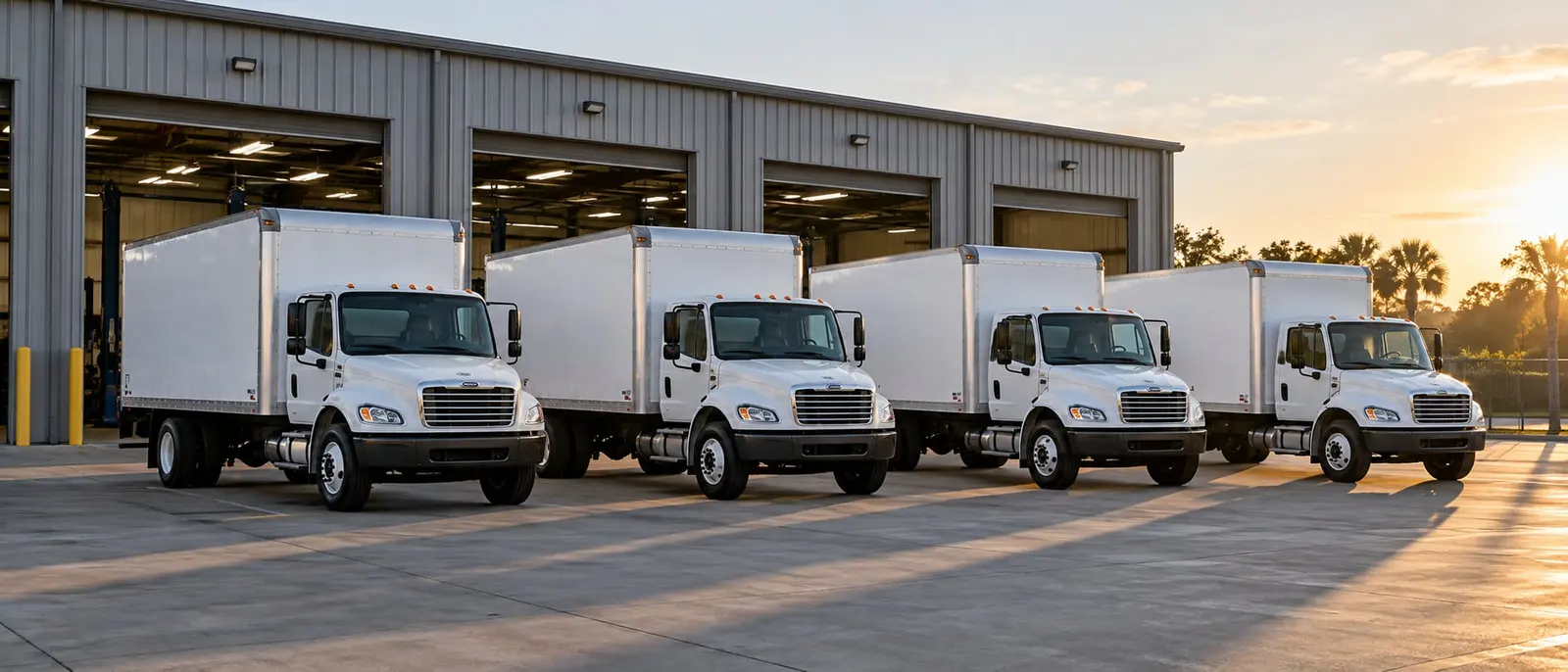
Roads are built and kept up by trucks: dump trucks bringing base rock, milling and asphalt, distributors laying tack, sweepers and water trucks, striping and attenuator trucks protecting the crew, and tractors hauling pavers and rollers between jobs. In Hernando, Pasco and Citrus counties that work goes on year round, through summer heat and afternoon storms. RDI Power maintains and repairs road fleets in Brooksville and at your yard.
What a road fleet runs
- Dump trucks for base rock, milled material and asphalt
- Tack and asphalt distributor trucks
- Street sweepers
- Water trucks
- Striping trucks and truck-mounted attenuator (TMA) trucks
- Sign trucks and crew trucks
- Tractors with lowboys and tilt trailers for pavers, rollers and milling machines
The duty cycle that wears them out
Crawling speed
A dump truck feeding a paver moves at walking pace, and sweepers and striping trucks work slowly for hours. Low speed means low exhaust temperature, which loads particulate filters, interrupts regenerations and fouls EGR valves and coolers. A road fleet often sees more aftertreatment trouble than a highway fleet with far more miles. See exhaust and emissions.
Heat from above and below
A Florida summer afternoon, hot asphalt under the truck and very little airflow through the radiator add up. Fan clutches, radiators, charge air coolers and coolant condition decide whether a truck finishes the shift or sits on the shoulder with the hood up.
Loaded stop-and-go
Loaded trucks starting and stopping in a work zone wear brakes and work springs, hangers and frames. Brake adjustment and linings deserve a look every PM. See brake systems.
Electrical load
Arrow boards, beacons, work lights and backup alarms run off the truck’s charging system for whole shifts, often at idle. Alternators and batteries work harder than the truck’s original design expected, and weak charging shows up as flickering lights and strange faults.
Auxiliary drives
Sweepers and distributors add auxiliary engines, pumps and PTO drives that put loads on the truck a highway tractor never carries. Leaks and drive problems there can sideline a truck with a perfectly healthy engine.
Getting a road fleet through summer
The hardest months for a road truck in Central Florida are the hot, wet ones. Afternoon storms stop paving, then the trucks go back to work in heat and humidity that push every cooling system to its limit. A cooling service before summer, with cores cleaned, hoses and belts checked, fan drives tested and coolant condition confirmed, costs far less than a truck that overheats on a paving day with a crew waiting on it.
How RDI Fleet keeps a road crew rolling
- Hour-based PM for trucks that idle and crawl, timed around the paving schedule
- Rain-day scheduling. When weather stops paving, the trucks are parked anyway, and that is a good day for PM
- On-site service at the yard or staging area through mobile diesel repair
- Annual DOT inspections for trucks and the trailers that haul equipment. See DOT inspections
- Digital inspections that show crews and managers the same photos the technician took
- 24/7 roadside assistance and the 2-year/24,000-mile warranty for fleet accounts
Road contractors usually run site trucks too. Our construction fleet page covers those, and an RDI Fleet plan can carry both.
Why downtime matters on a road job
Paving is a chain: plant, trucks, paver, rollers. When trucks stop arriving, the paver stops, and a paver that sits too long leaves a cold joint and a crew standing in the heat. Lane closures are permitted for set windows, and a broken truck can push work past the window and into another night or another week. On a maintenance crew, a truck down means potholes, shoulders and signs that wait.
Keep the crews paving
Tell us what your road fleet runs and how your season is scheduled. We will plan maintenance around the paving calendar and come to the yard when a truck goes down.