
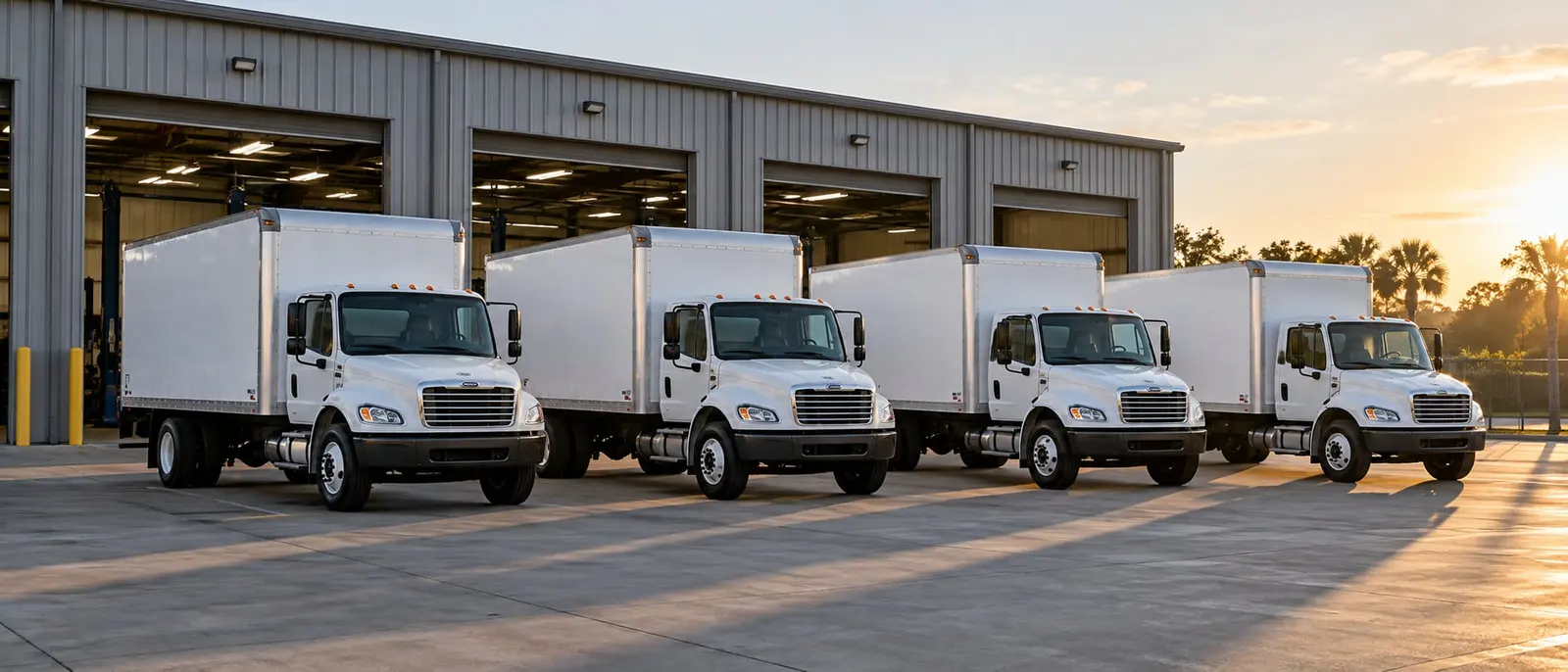
Emergency work does not keep shop hours. When a hurricane comes ashore, a water main breaks or a road washes out, the trucks that respond are the ones a community counts on, and they are often the trucks that have sat the longest since their last real workout. RDI Power maintains and repairs the diesel fleets behind emergency services: public works, emergency management, utility crews, storm debris haulers, and towing and recovery operators. The vehicles that run the calls themselves, ambulances, fire apparatus and police trucks, have their own page on first responder vehicles.
The fleets behind an emergency response
- Public works trucks. Dump trucks, vacuum and sewer trucks, water trucks and equipment haulers that clear and rebuild roads. See our page on road fleets.
- Utility trucks. Bucket trucks, digger derricks and service trucks that restore power and water. See lifting fleets.
- Debris haulers. Grapple trucks, dump trucks and tractors pulling dump trailers through the weeks of cleanup after a storm.
- Supply trucks. Water, fuel and supply trucks moving into staging areas.
- Recovery trucks. Wreckers and rollbacks clearing roads and moving disabled vehicles.
Readiness before the season
Florida’s hurricane season runs June 1 to November 30. The time to find a weak battery or a cracked hose is in May, not the day a storm turns toward the coast. A pre-season PM on a response truck covers:
- Batteries load-tested and the charging system checked. See batteries
- Cooling system pressure-tested, with worn belts and hoses replaced
- Fuel filters changed and tanks checked for water, especially on trucks that sat
- Tires, brakes and lights inspected
- DPF and aftertreatment checked, so a truck does not derate halfway through a long day of slow work
- A scan for stored fault codes that point to trouble ahead
Trucks that sit between emergencies need calendar-based service, not mileage-based. Fuel that sits for months collects water and can grow microbial contamination that plugs filters at the worst possible time.
After the storm
Response trucks often work through standing water and debris for days. Water pushed past seals and vents can contaminate axle, transmission and engine oil, and flooded connectors corrode in the weeks after. Once the cleanup slows, a post-storm inspection checks fluids for water, looks over wiring and connectors, and catches tire, brake and suspension damage from debris before it turns into the next failure.
When something breaks during a response
RDI Fleet accounts get 24/7 roadside assistance. During a response, that means a technician can come to the truck at the staging yard or the work site, diagnose it there and fix what can be fixed on-site, once roads are open and it is safe to travel. Work that needs a bay comes to Brooksville, and we plan the move with you. See roadside assistance and mobile diesel repair.
How RDI Fleet fits a public fleet
- PM intervals by calendar and engine hours, not just miles
- A pre-season readiness visit scheduled every spring
- On-site service at your yard, so trucks are not pulled away to a shop
- Annual DOT inspections for units that fall under FMCSA rules
- Photo-documented inspections by unit, useful for budget requests and audits
- The 2-year/24,000-mile RDI Fleet warranty on repairs
Onboarding starts with a walk-around of the fleet and a schedule built from it. See how RDI Fleet works.
Why downtime matters in an emergency
After a storm, the trucks clearing roads decide how fast everyone else gets back to work: power crews, ambulances, grocery deliveries and people trying to get home. Every truck that fails takes a crew off the road at the moment it is needed most, and replacing it on short notice is rarely possible when every agency in the region is looking for the same equipment.
Get ready before the next storm
Call in the spring and we will schedule readiness PM on your response fleet. When a truck breaks during the season, fleet accounts can call us around the clock.