
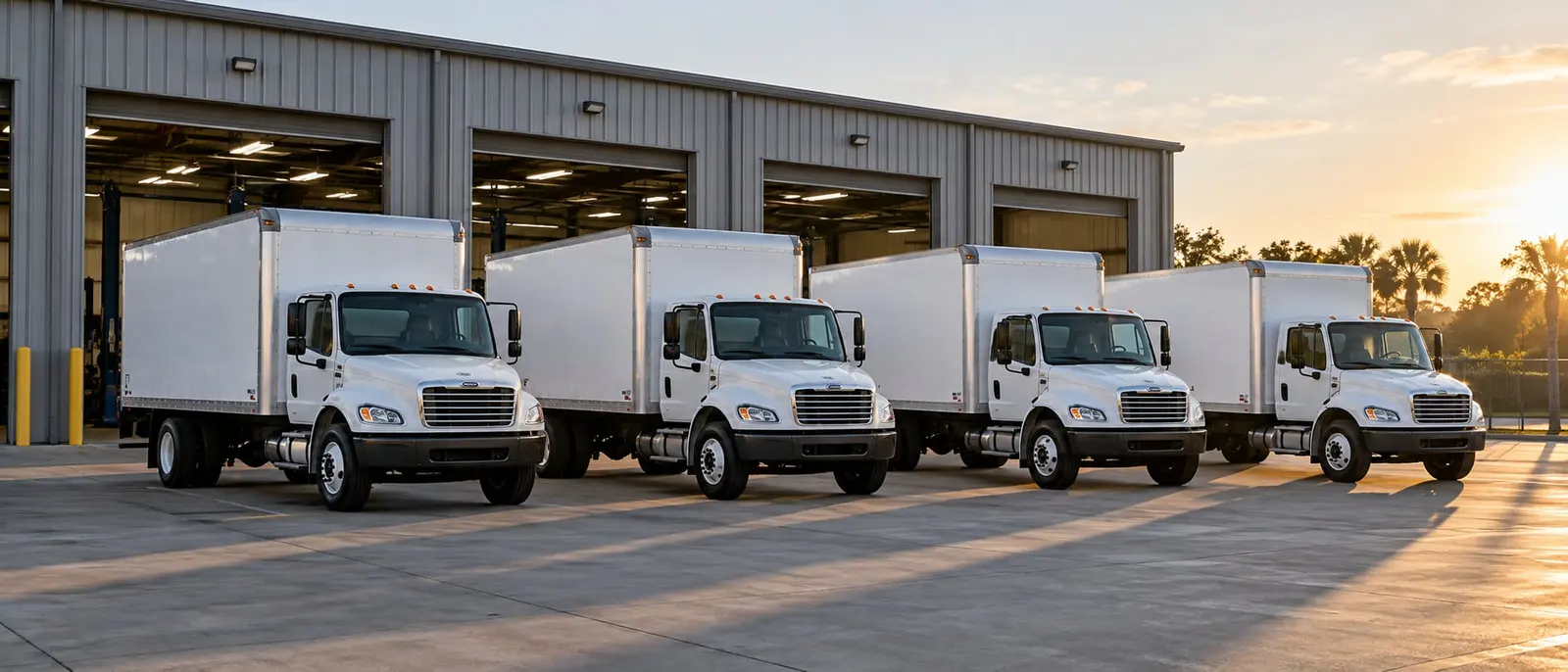
Lake Butler is a lake-heavy residential area wrapped around the town of Windermere, about 11 miles west-southwest of downtown Orlando. It is a residential community first, home to Isleworth, Summerport Beach and Windermere High School, and that shapes what a fleet plan here looks like. The trucks that work Lake Butler spend their working hours among homes and lakes, so maintenance has to happen somewhere else: at the yard, on a schedule, before something fails on a narrow street between two lakes.
RDI Fleet is RDI Power’s fleet program. For Lake Butler operators, technicians come out from the Brooksville shop and do most of the work at your yard.
Where a Lake Butler fleet’s maintenance happens
Your trucks may not park in Lake Butler overnight, and they do not need to. The technician comes to wherever they are kept. Visits are scheduled around your operation, on the days and at the times a unit can be spared, so a crew does not lose its truck in the middle of a job.
One visit can take care of several units, so the trucks not being serviced stay on their jobs. The technician carries the diagnostic software and equipment to repair as well as maintain, and when a truck needs something small, such as a sensor, a hose or a set of batteries, it is often handled on the same visit rather than booked for later.
When a repair needs a lift or a teardown, such as engine or transmission work, the truck is booked into the Brooksville shop on a date we agree on. Fleet accounts get priority, so it does not wait in line behind walk-in work.
Pickups, vans and medium duty trucks on a Lake Butler plan
Each class of vehicle gets intervals that fit how it works:
- Diesel pickups and vans. Start from the factory schedule or the truck’s own oil life reading, then tighten it for towing, long idles or a day of short hops between job sites.
- Medium duty trucks. Counted in engine hours as much as miles, PTO time included, since a truck can run all afternoon at a site and log almost no distance.
- Trailers. A separate checklist for brakes, wiring, hubs and tires, done when the tow vehicle is in for service.
A typical visit covers oil and filters, fuel filters and the water separator, the air intake, coolant and belts, brakes, tires, steering and suspension, batteries and charging, aftertreatment, and a scan for codes. Our preventive maintenance page lists those items in more detail.
Reports a Lake Butler fleet manager can use
Each unit gets a digital vehicle inspection on every visit, with photos of what the technician found and notes on what was done. A worn belt or a weeping hose shows up as a photo you can approve from your desk, and over time the reports build a service history for every truck. That history makes budgeting a plan instead of a guess, and it shows clearly when a unit has reached the point where replacing it beats repairing it.
Annual inspections and onboarding for Lake Butler units
Any commercial vehicle with a GVWR of 10,001 lb or more used interstate needs a yearly DOT inspection, with the report kept on file for 14 months. On an RDI Fleet plan, each unit’s inspection date sits on the same calendar as its PM, so the truck is pulled from work once for both.
Starting is simple. We talk through what you run and how it works, a technician walks your yard and builds an inventory by unit, and you get a schedule of what is due. If your records are thin, the first round of inspections fills them in.
Turnpike and SR 429 coverage for Lake Butler fleets outside shop hours
Lake Butler sits near 2 of the region’s Strategic Intermodal System highways, Florida’s Turnpike and SR 429, and FDOT counts about 35,829 trucks a day on the nearby Turnpike. Fleet accounts are covered by roadside assistance around the clock on both, and the fleet warranty on repairs runs 24,000 miles or 2 years.
Get the program overview on our RDI Fleet maintenance page, or see how plans work for crews in the newer villages on our Horizon West fleet maintenance page. Then call (352) 433-3800 and tell us what you run.