
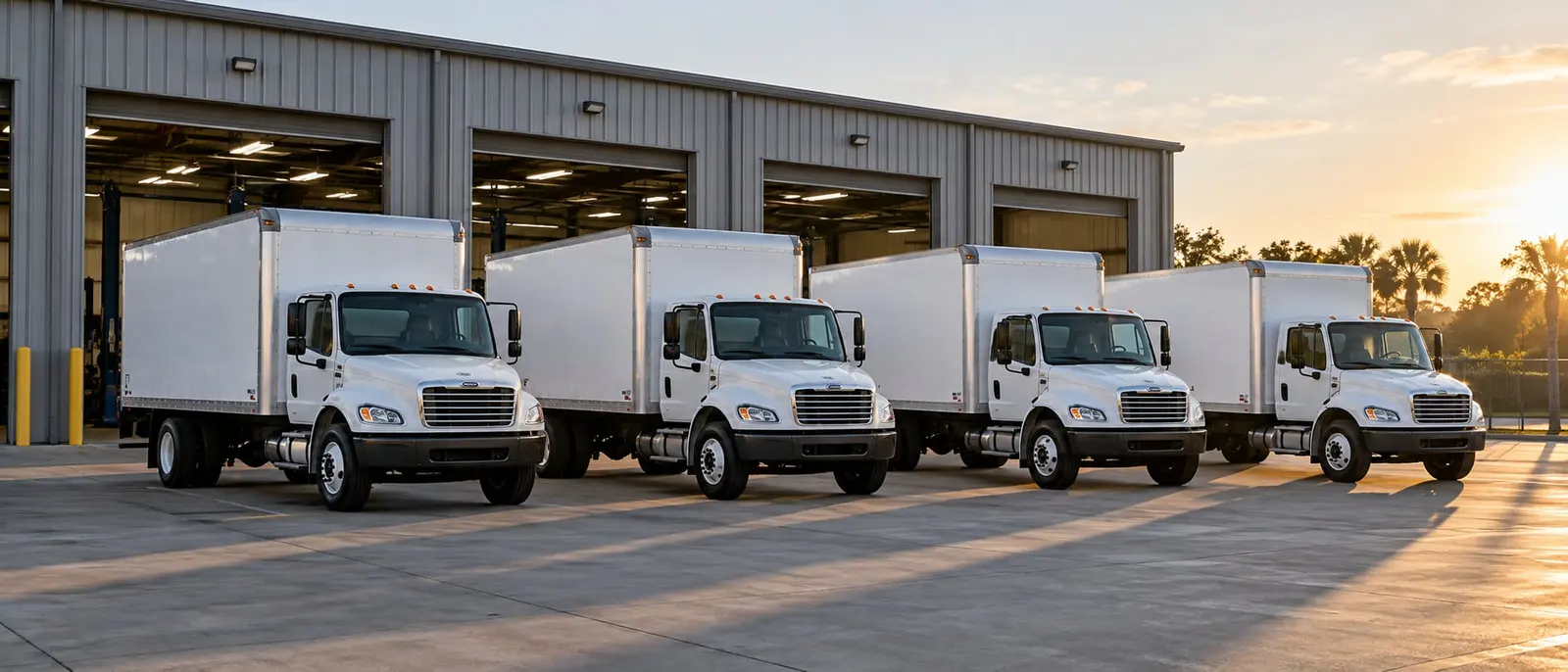
Seffner began as a shipping point. Along with Mango and Dover, it was one of the three main towns on the South Florida Railroad between Tampa and Plant City, and each grew into a place where goods moved out. Today the freight rolls on I-4, which forms Seffner’s northern edge, and on SR 574 along its southern edge. Strawberry farms and lakes are still here, even as subdivisions replace rural land. RDI Fleet, the fleet program run by RDI Power, gives operators in Seffner a maintenance plan built around their own trucks, with technicians from our Brooksville shop doing the routine work on site.
Farm fleets near the Seffner strawberry fields
Hillsborough County’s farm economy leans on strawberries, the top crop by sales value in the county’s 2011 figures, and the county’s Agricultural Extension Office sits in the Seffner area. If your trucks work farms here, their year is uneven: weeks of heavy use, then stretches where they hardly move.
An RDI Fleet plan treats both halves of that year. Before the busy stretch, the heavier items get done: cooling system service, brake work, tires and anything the last inspection flagged. During the slow weeks, calendar-based checks keep parked units healthy, because batteries discharge, fuel collects water and rubber ages whether a truck runs or not. Our agriculture page lists the farm trucks and trailers we service.
Yards on MLK Boulevard and US 92 in Seffner
The Seffner-Mango Community Plan steers commercial development to the US 92 and Martin Luther King Boulevard corridors. Trucks are a big share of what moves there. FDOT counts about 5,486 trucks a day on SR 574 between South Parsons Avenue and South Kingsway Road, 21.1% of roughly 26,000 vehicles.
A truck working a signal-heavy corridor like MLK spends much of its day stopping, turning and idling. That duty cycle is hard on brakes and adds idle hours, so a plan for them sets service intervals on engine hours as well as miles, measures brake linings at every visit and keeps an eye on exhaust aftertreatment, which does not get much highway heat in town.
A plan that keeps up as Seffner grows
New neighborhoods mean new routes and, for many operators, more trucks. A plan that worked for 5 units can fall apart at 15 if nobody keeps the records straight. RDI Fleet starts with an inventory of every truck and trailer: VIN, engine, mileage or hours, condition and what each one does. As units join, they get the same treatment, with intervals set for their class and annual DOT inspection dates added to the shared calendar. Used trucks bought to keep up with demand get a full baseline inspection first, so you know what you bought before it goes on a route, and every unit’s photo history stays in one place no matter how big the yard gets. Our article on fleet diesel engine maintenance covers what a solid PM program looks like.
Matching intervals to each Seffner unit
One schedule stretched across every truck wastes money on some units and shortchanges others. We set intervals by what each one does:
- Pickups and vans that run local errands follow the manufacturer’s schedule or oil life monitor, shortened when they tow heavy or idle a lot.
- Box trucks and straight trucks on MLK or US 92 routes get engine-hour intervals alongside mileage, since stop-and-go work piles up hours.
- Tractors that head out on I-4 every day run on mileage, which suits steady highway duty.
- Farm trucks and trailers that sit part of the year get calendar checks so a parked unit does not quietly fall behind.
What a Seffner yard visit looks like
Technicians arrive with diagnostic software, filters, fluids and the tools for routine repairs. On a typical visit they change oil and filters, service the fuel filters and water separator, inspect belts, hoses and coolant, check tires and brakes, grease chassis points and scan every unit for stored or pending fault codes. Light, medium and heavy duty trucks are all in scope, along with trailers and buses. Work that needs a lift, such as a transmission replacement or major engine repair, is planned into the Brooksville bays on a date that keeps your schedule intact.
Warranty, priority and 24/7 roadside for Seffner accounts
Fleet accounts move to the front of the line when something breaks between visits. Repairs done on Seffner fleet accounts carry a 2-year / 24,000-mile warranty. And because a truck does not choose when to fail, fleet customers have roadside help around the clock, nights and weekends included.
To see how the whole program fits together before you call, read the RDI Fleet maintenance overview. Operations a few miles north, in farm country between I-4 and I-75, can see our Thonotosassa fleet maintenance page. Call (352) 433-3800 to talk through the trucks you keep in Seffner.