
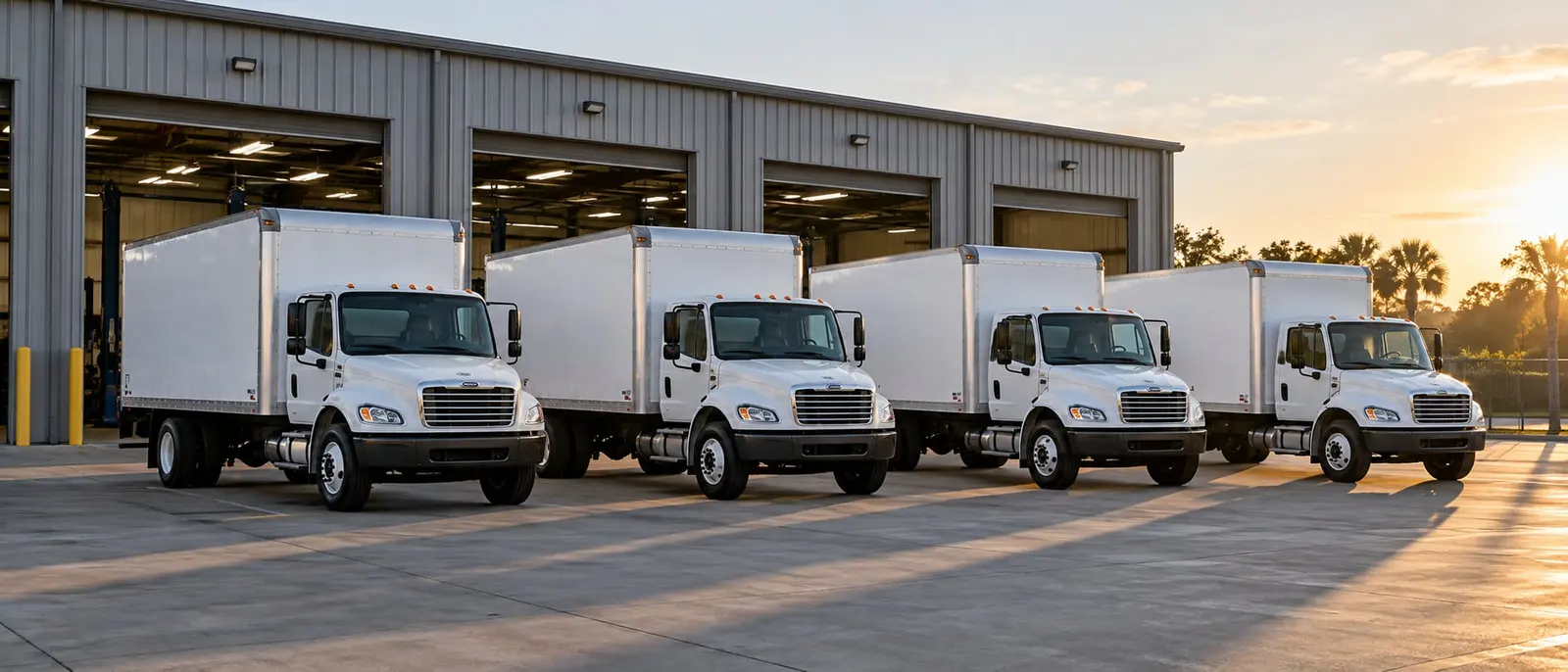
Temple Terrace runs its own sanitation: twice-weekly solid waste collection for nearly all residents, weekly curbside recycling, and commercial roll-off and front-load service. That makes heavy vocational trucks a normal sight on city streets, and anyone who operates similar equipment knows how hard that work is on a truck. RDI Fleet, RDI Power’s fleet program, builds maintenance plans for exactly that kind of duty. Technicians come out from our Brooksville shop to service units at your yard on a schedule set around your routes.
Why Temple Terrace vocational trucks need hour-based plans
A roll-off truck or a front-loader can work a full shift and log only a few dozen miles. Its engine, though, has been running the whole time, idling, powering a PTO and hauling heavy loads in short bursts. A maintenance schedule based on the odometer alone falls badly behind.
An RDI Fleet plan for vocational trucks tracks engine hours, with PTO time counted, and sets oil, filter and fluid intervals from those. It then watches the systems this work punishes:
- Brakes. Heavy loads and constant stops wear linings and drums fast. Lining thickness and adjustment are checked every visit.
- Suspension and steering. Loaded containers and curb approaches stress springs, bushings and steering parts.
- Cooling. Low speeds mean little airflow through the radiator, so coolant, fan clutch and hoses get close attention.
- Exhaust aftertreatment. Low exhaust temperatures from idling and slow work make passive DPF cleaning harder; regen history and soot load are reviewed during PM. Our post on DPF and regen problems explains why.
- Leaks. Engine, transmission, differentials, power steering and hydraulic lines are all checked for weeping before it becomes a failure.
- Transmissions. Automatics such as Allison units work hard under heavy stop-and-go loads, so fluid condition and cooler lines are inspected every visit.
Temple Terrace’s roads and the trucks on them
Temple Terrace sits beside some of the most truck-heavy roads in FDOT’s 2025 counts: US-301 at 22.7% trucks and SR-583 at 21.2%, with I-75 along the city’s eastern edge. Between 1984 and 1987 the city annexed Telecom Park and nearby areas, doubling its size. If your yard mixes vocational trucks with tractors, box trucks and pickups, one plan covers them all, each class on its own intervals. A unit that mixes neighborhood stops with highway runs on I-75 wears in both ways at once, which is why each truck’s intervals come from its own inspection history rather than a fleet-wide average.
How a Temple Terrace plan runs week to week
The plan starts with an inventory of every unit: VIN, engine, hours and miles, condition and open problems. We set intervals, lay out a calendar of yard visits and put annual inspection dates on the same schedule. Our DOT inspections page describes the federal annual inspection.
On a visit day, the technician works through the list with diagnostic tools and service equipment. Each unit gets a digital vehicle inspection with photos and notes, sorted into what needs action now and what can be planned. You approve repairs; small ones often happen on the spot. Larger jobs, such as transmission rebuilds or internal engine work, are scheduled into our Brooksville shop with you, at a time that does not strip a route.
Budgeting a Temple Terrace vocational fleet
Vocational trucks are expensive to buy and expensive to lose for a day. A roll-off truck parked with a dead alternator is a list of container swaps that do not happen, and a front-loader down on its route day pushes work onto the rest of the fleet. The point of a plan is to turn as many of those surprises as possible into scheduled repairs.
The inspection reports make that concrete. A brake lining photographed at a third of its thickness, a coolant hose that has gone soft, a battery that tested weak: each one goes on a list with a recommended timing, so you can approve it for the next visit instead of paying for it on a shoulder. Over a year, a Temple Terrace operator can see what each truck costs to keep, which units are worth investing in and which are close to replacement. And because fleet repairs carry a 2-year, 24,000-mile warranty, a repeat failure inside that window is covered.
Temple Terrace fleet warranty, priority and roadside
Fleet accounts get priority when something breaks, and repairs carry the RDI Fleet warranty of 2 years / 24,000 miles. Roadside assistance runs 24/7 for account vehicles, which matters for trucks that start before dawn.
A Temple Terrace vocational plan is one version of the program laid out on RDI Fleet maintenance. For breakdowns, our Temple Terrace mobile diesel repair page explains what to do, and fleets that also run the University area can compare University fleet maintenance. Call (352) 433-3800 and tell us how many hours your trucks run in a day.