
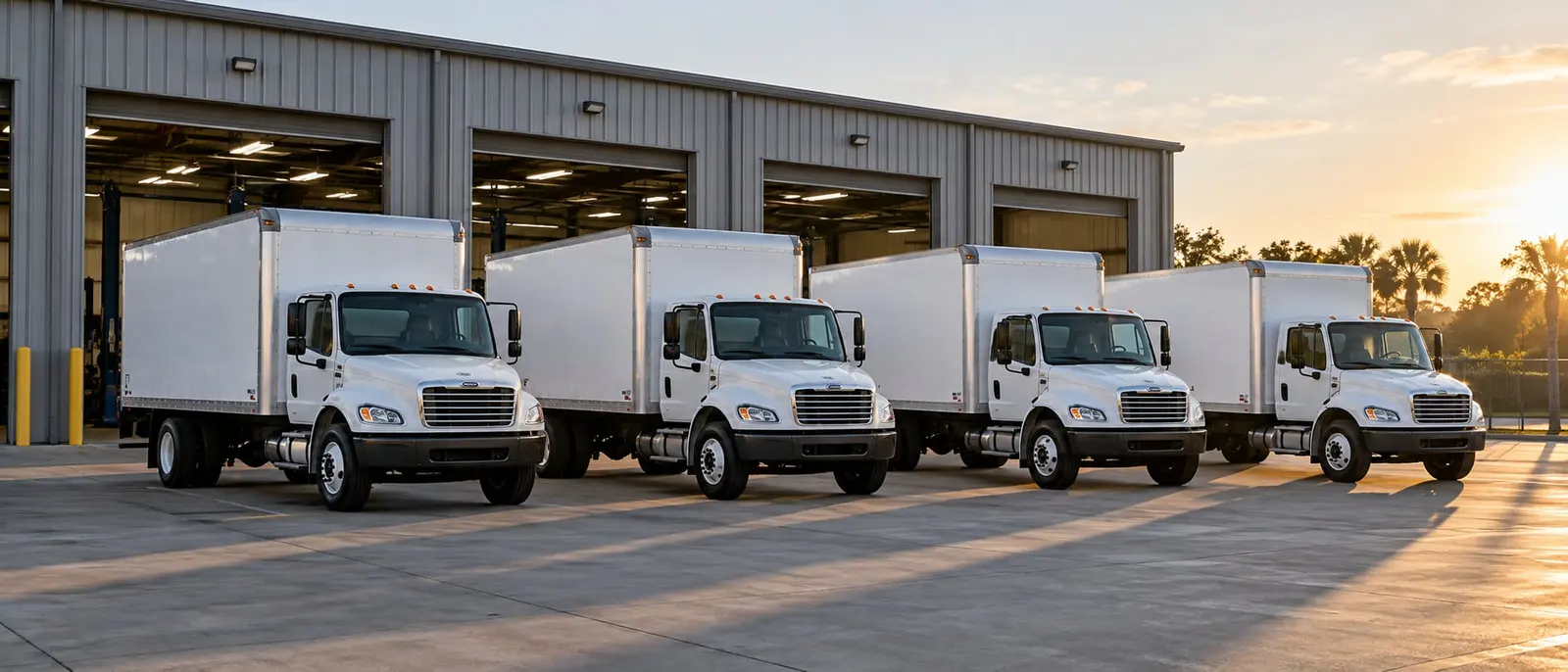
In August 2025, Circularity2 announced a biochar plant on a 24-acre site in the Cross City Industrial Park, with up to 35 jobs and a feedstock of several hundred thousand tons of wood a year. The company said it picked Cross City for the wood basket nearby, the harvesting activity and the sawmills, along with Dixie County’s long history in silviculture and wood products. However that plant develops, the wood already moves by truck, and trucks that haul in the woods need maintenance that keeps up with the work. RDI Fleet is RDI Power’s fleet program. There is no Cross City branch; our technicians make the trip from Brooksville on dates agreed with you.
Cross City timber haulers and the work ahead
The announcement does not name a construction start or opening date, so nobody should plan a fleet around it yet. The underlying fact is older and steadier: Dixie County’s timber goes to market on trucks, and US 19/98 is the county’s main road. If your trucks haul logs, chips or lumber, the plant only adds to a question you already face, which is how to keep heavy trucks working on rough ground without losing days to breakdowns. A plan answers it by finding the worn bushing, the chafed air line and the weak battery in the yard, before they strand a loaded truck on a sand road.
Dixie County is also growing; its population rose 15.6% between 2017 and 2022. If your fleet grows along with it, each truck you add gets an intake inspection before it joins the schedule, so a used truck’s hidden cooling, injection or brake problems come out in the yard instead of halfway to a mill.
Maintenance for Cross City trucks that leave the pavement
Woods work is hard on a truck in specific ways, and the plan checks for each of them:
- Air intake. Dust loads filters fast, so restriction gets measured and the intake checked for leaks that let dirt past the filter.
- Suspension and frame. Ruts and stumps work springs, bushings, mounts and crossmembers; they are inspected at every visit, not when something cracks.
- Tires. Sidewall cuts and punctures from debris matter as much as tread depth.
- Brakes and air system. Linings, drums, slack adjusters and lines are measured and leak-checked, with extra attention to lines exposed under the chassis.
- Coupling. Fifth wheel condition, mounting and lubrication on tractors pulling log trailers.
- Electrical. Lights, harnesses and connectors take a beating from brush and vibration.
Engine oil and filters, fuel filters and water separators, coolant, belts, aftertreatment and a code scan round out each service, with photos of every finding. Our forestry page covers the wider range of timber work we do.
Building a Cross City RDI Fleet schedule
Every plan starts with an inventory of your trucks and trailers, recording the engine, the miles or hours, the condition and the duty of each. Trucks that idle at landings for hours do better on engine hours than mileage, while those running US 19 to a mill all day suit a mileage interval. We set those intervals with you, line up annual inspection dates for units that fall under federal rules, and give you a calendar. Visits happen on weekdays at your yard. Anything requiring a lift or an engine teardown is booked into our Brooksville bays around your hauling schedule, and fleet accounts get priority when something breaks in between.
Records and coverage for Cross City trucks on US 19
After each visit, every truck serviced has a new photo report in its file showing what was found, what was fixed and what is coming due. Over a season, that record shows which trucks earn their keep and which are draining the budget. Fleet repairs on Cross City trucks are warrantied for 2 years or 24,000 miles, and fleet accounts can call for roadside help 24/7, which counts for a lot on a long, quiet stretch of US 19 after dark.
When a truck breaks down before it is on a plan, our Cross City mobile diesel repair page explains on-site service. For yards in Gilchrist County, see fleet maintenance in Trenton, and for the program as a whole, RDI Fleet maintenance. When you are ready, (352) 433-3800 reaches the people who will build your Cross City plan.