
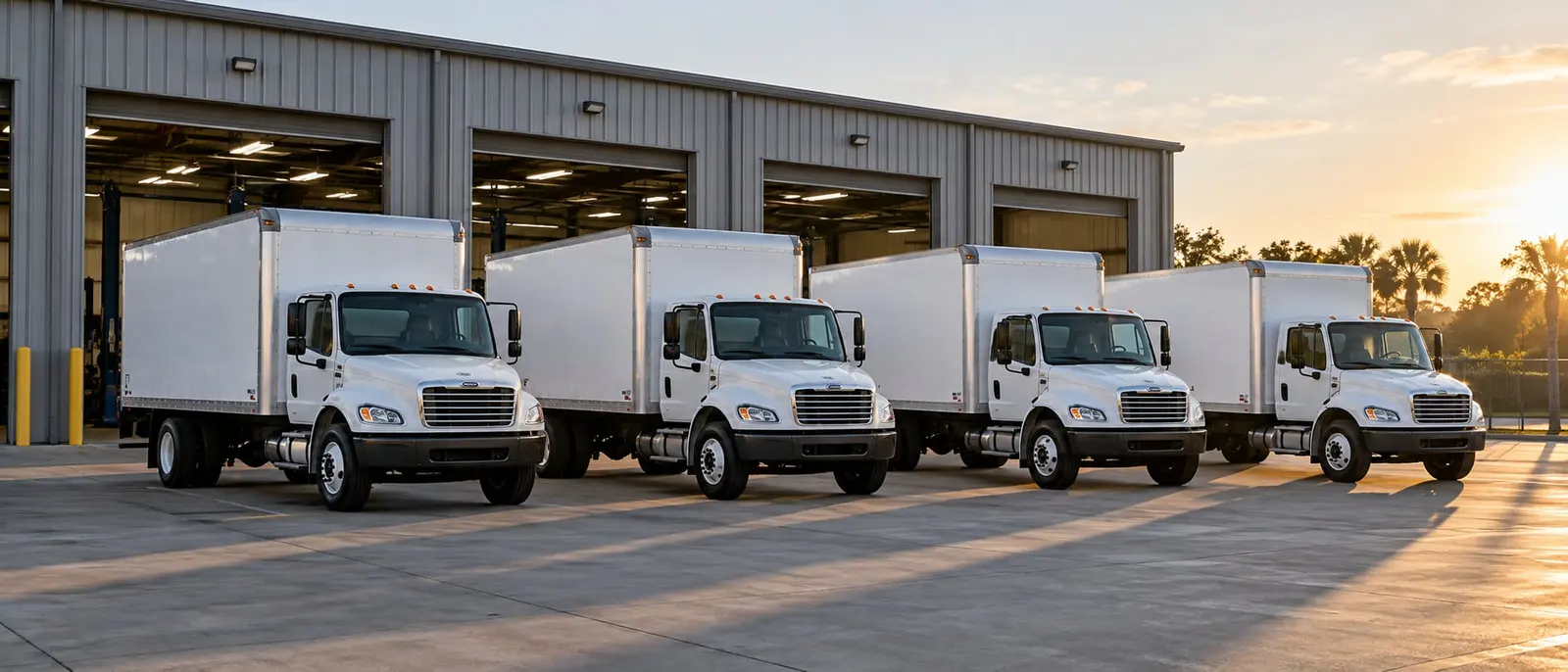
Fleet maintenance in East Lake is mostly a scheduling problem. Trucks based at the top of Pinellas County, north of Oldsmar and east of Palm Harbor, may spend the day working the length of the county, and every hour a unit spends at a shop is an hour it is not on a route. RDI Fleet, the fleet program run by RDI Power, answers that with planned visits: our technicians come to the yard from Brooksville on a schedule set around your operation, and the work is recorded unit by unit.
The long Pinellas run from an East Lake yard
East Lake sits at one end of a long county. If your trucks haul garbage, each load ends at the county’s Solid Waste Disposal Complex at 3095 114th Ave. N. in St. Petersburg, where all garbage collected in Pinellas County goes and the waste-to-energy plant burns about 2,700 tons a day. Other operators spend their miles on US 19, where FDOT counts about 5,474 trucks a day on the busiest stretch near East Lake.
That mix of duty matters for maintenance. A truck that crawls through neighborhoods in the morning and covers a long highway stretch in the afternoon wears brakes like a city truck and piles up miles like a highway truck. A single mileage interval copied from the owner’s manual seldom fits both.
How an East Lake RDI Fleet plan gets written
The first conversation is about your trucks, not a package. We go over:
- The unit list. Year, make, engine, mileage or engine hours, and what each truck does.
- The duty cycle. Stop-and-go work, highway runs, idle time and loads, unit by unit.
- The budget. What breakdowns cost you now and what you would rather plan for.
- The calendar. Annual DOT inspection due dates and the days each truck can be spared.
Intervals then follow the work. Highway units can run on miles. Trucks that idle at job sites or run PTO equipment are often better tracked by engine hours. Diesels that spend most of the day at low speed also deserve attention to the exhaust aftertreatment, since a DPF loaded by short, cool runs needs regeneration more often than one that sees steady highway heat. The service items behind each East Lake visit are spelled out on our preventive maintenance page.
The first walk-around at an East Lake yard
Before the schedule exists, a technician walks the yard with you. Each unit gets logged by VIN, engine and current mileage or hours, and anything already leaking, worn or throwing codes is flagged so it can be dealt with before routine PM starts. No unit list on file yet? We assemble it during that first visit, and it becomes the backbone of every report that follows.
East Lake yard visits instead of shop trips
Much of the routine work happens where the trucks park overnight. A technician can handle oil and filter service, fuel filters, chassis lube, brake and tire checks and a scan for stored codes at the yard, and a group of units can be serviced in one visit instead of being shuttled north one at a time. Each truck’s annual inspection can be lined up with its PM so it is out of service once for both; our DOT inspections page explains what that covers. Work that needs a lift, such as major engine or transmission repairs, is scheduled into the Brooksville bays, and we plan that move with you.
Records and coverage for East Lake units
Every visit ends in a digital inspection report for each truck, with photos of each finding and the technician’s notes. Kept over a year, those reports become a service history that shows which units are worth repairing and which are costing you. Fleet accounts get priority service when something breaks between visits, a 2-year / 24,000-mile warranty on fleet repairs, and 24/7 roadside assistance, so a unit that stops on US 19 after hours is still covered.
An East Lake plan can include light, medium and heavy duty trucks, plus trailers and buses. See RDI Fleet maintenance for the whole program, or compare how plans work for yards nearer the Gulf on our Palm Harbor fleet maintenance page. When your East Lake unit list is ready, call (352) 433-3800.