
Between Exit 27 at SR 52 and Exit 46 at SR-50, the Suncoast Parkway gives a Bayonet Point driver plenty of time to notice how a truck tracks. A slight drift that needs a constant nudge, a steering wheel that sits a few degrees off when the truck is going straight, a tire that is wearing out on 1 shoulder: all of those can be alignment, and some of them are not. RDI Power aligns light, medium and heavy duty trucks at our shop in Brooksville, and we find out which one you have before setting an angle.
Drift on the Parkway between Exit 27 and Exit 46 for Bayonet Point drivers
A truck that drifts at highway speed has a few likely causes. Low or uneven caster makes the steering feel vague and slow to return to center. A camber difference from side to side pulls the truck toward the side with more positive camber. Toe that is out of spec does not usually cause a pull by itself, but it scrubs tread fast. Worn parts in the steering gear, tie rods or ball joints let the wheels wander no matter what the settings say, and a dragging brake or a tire with a shifted belt can imitate a bad alignment. We check all of that before the truck goes on the rack.
Steer and drive axles on Bayonet Point tractors and box trucks
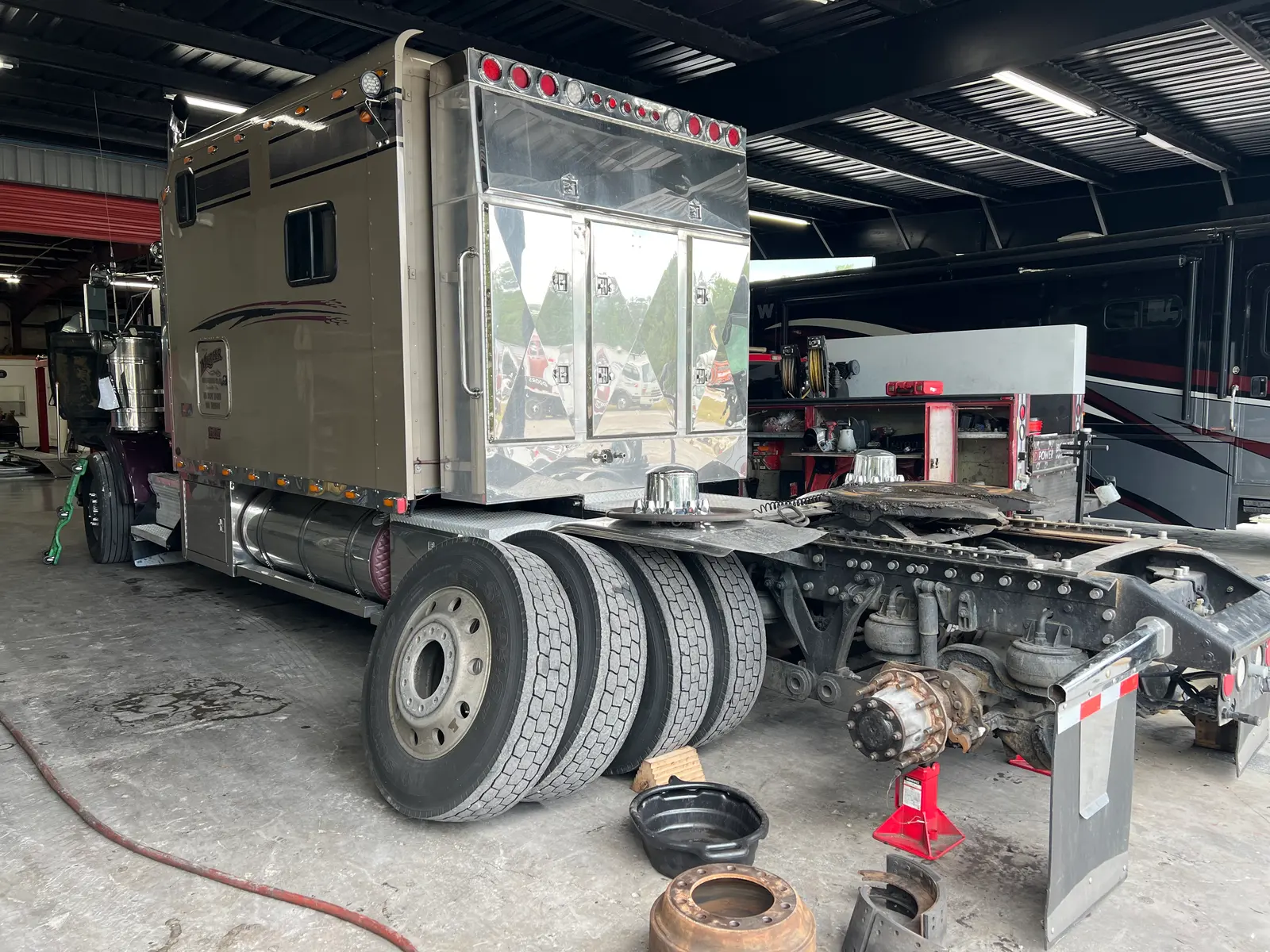
Heavy truck alignment is more than the front end. On a tandem-axle tractor or dump truck, both drive axles must be square to the frame and parallel to each other. When they are not, the rear of the truck pushes off at an angle, the driver holds the wheel slightly turned to go straight, and the steer tires wear even though their own settings are correct. From behind, the truck appears to travel a little sideways. We measure steer axle angles and drive axle thrust together on tractors, box trucks and vocational trucks.
Medium duty trucks bring a different issue. A box truck or service body truck that carries its load unevenly, heavier on 1 side or at the back, can wear tires in ways that only make sense once you know how it is loaded. Telling us what the truck usually carries helps us set it up for the way it actually runs.
Bayonet Point work vans and the weight they carry
Work vans and chassis cabs that haul tools, parts and equipment all day can sag over time as springs tire, and ride height changes alignment. If a van that used to wear tires evenly has started eating them, springs and ride height get checked along with the angles. Fixing the alignment without correcting a sagging spring only resets the clock.
Reading tire wear before a Bayonet Point alignment
Tread is the best history we get:
- Feathered edges that feel sharp in 1 direction across the tread point to toe.
- A single shoulder worn more than the other points to camber, or to a load that sits off to 1 side.
- Cupping or scalloping usually means worn shocks or balance problems rather than alignment.
- Steer tires wearing fast on a tandem truck with good front settings points to drive axle thrust.
After the inspection, the technician sets tire pressures, measures toe, camber, caster and thrust, adjusts what the design allows and road tests to confirm the result. Your photo report shows the tires and the parts we checked. For more on how we approach it, see truck wheel alignment, and for tire selection and replacement, our tire service page. Fleets can tie alignment checks into the plan described on the Bayonet Point fleet maintenance page, and drivers around Regency Park Boulevard and Ridge Road can read Jasmine Estates truck alignment. To book, call (352) 433-3800.