
An alignment fixes angles. It does not fix a tired spring, a worn ball joint or a tire with a broken belt, and on work vans and loaded trucks, those are often part of the story. RDI Power aligns pickups, vans, box trucks, buses and heavy trucks in Brooksville, about 29 road miles from central Jasmine Estates, and we look at everything that holds the wheels in place before setting a single angle.
Loaded vans and sagging springs in Jasmine Estates
Jasmine Estates sits between US 19 and Little Road, with Ridge Road’s 4-lane commercial stretch running through it, and if your work van covers those streets all day with a full load, its springs feel every mile. A Sprinter or other work van that carries shelving, tools and parts every day lives with a constant load, often heavier on 1 side or at the back. Over time the springs settle, and as ride height drops the alignment changes with it. Camber shifts, toe can wander, and the tires start wearing in a pattern that no amount of adjustment will fix while the van still sits low. The same thing happens to chassis cabs with service bodies and to box trucks loaded unevenly.
That is why an alignment on a loaded work truck starts with ride height. If a van that used to wear tires evenly has started eating them, we measure ride height side to side and front to rear, check the springs and shocks, and then set the alignment for how the truck is actually loaded. Telling us what it usually carries helps.
Feeling a pull on US 19 north of Jasmine Estates
The run from Jasmine Estates to Brooksville starts with miles of US 19, a good stretch for noticing a truck that drifts. Before calling it alignment, we rule out the usual imitators: uneven tire pressure, a tire with an internal belt problem, and a brake caliper that drags and pulls the truck toward that wheel. Then come the steering parts, because a loose tie rod end, a worn idler or pitman arm, or play in the steering gear lets the wheels wander no matter what the settings are. Only after that do the angles get measured.
Vibration or alignment: sorting it out for Jasmine Estates drivers
Drivers often book an alignment for a shake, and it is rarely the answer. A vibration in the wheel at a certain speed usually comes from tire balance, a bent wheel or a tire with a flat spot or separation. A shake felt in the seat can be the driveline, such as a worn U-joint or carrier bearing. On solid-axle 4x4 pickups, a violent shake after a bump points to worn track bar bushings, ball joints or tie rod ends, and the fix is new parts followed by an alignment. We check balance and the driveline first, so you pay for the repair that matches the symptom.
A Jasmine Estates alignment visit, start to finish
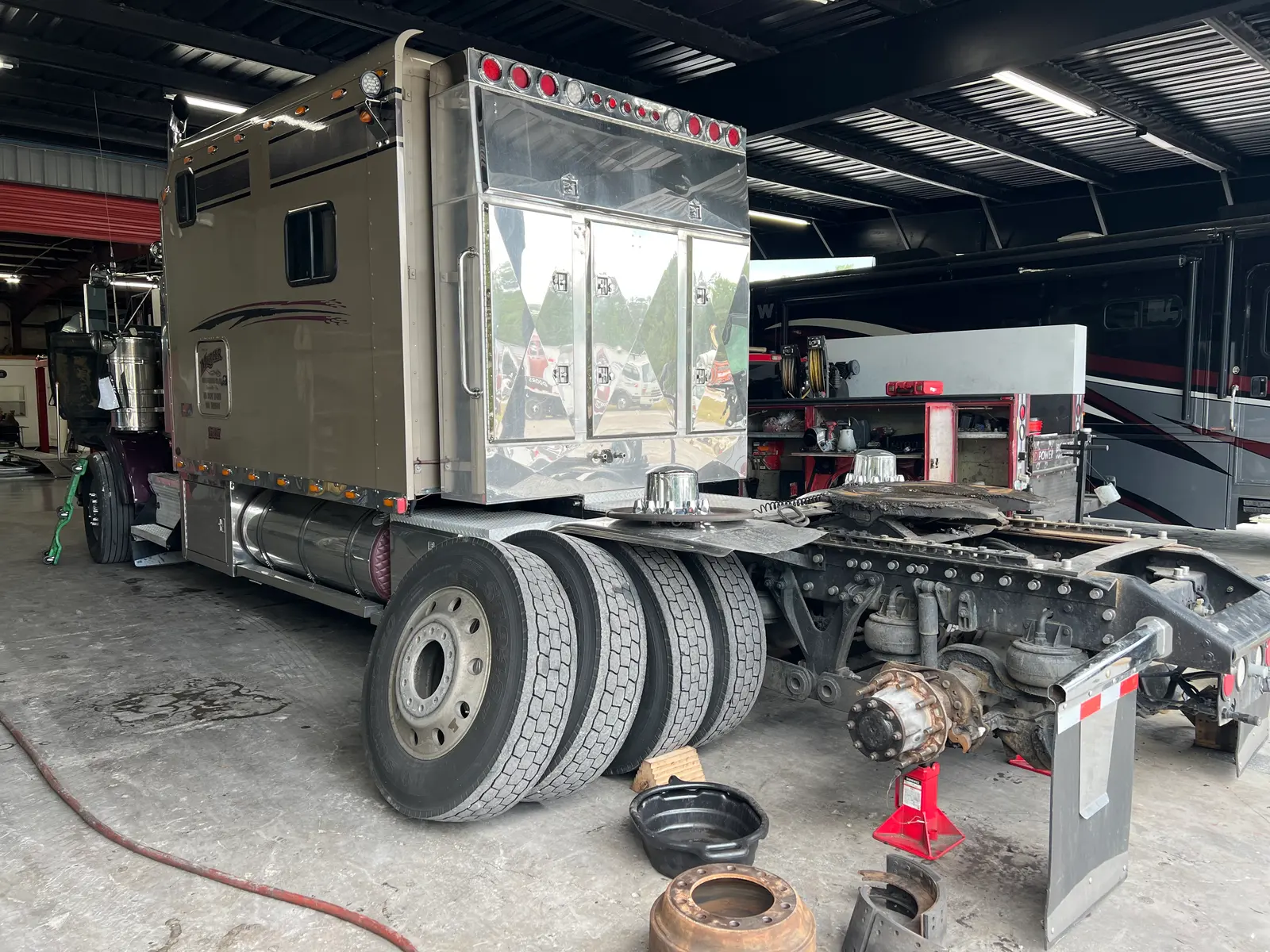
The technician road tests the truck, reads the tire wear, inspects steering and suspension parts for play, and sets tire pressures. Then toe, camber, caster and thrust are measured and adjusted within what the truck’s design allows, and a second road test confirms the truck tracks straight with the wheel centered. On tandem-axle trucks, drive axle alignment gets checked too, because a crooked drive axle can wear out steer tires that measure fine on their own. You get a photo report showing the tires and the parts that were checked.
For more on how we align every class of truck, see truck wheel alignment, and for the shock and spring side, our shocks and suspension page. Van fleets can fold alignment checks into the plan on Jasmine Estates fleet maintenance, and drivers nearer SR 52 can read Bayonet Point truck alignment. Call (352) 433-3800 to set up a time on the rack.