
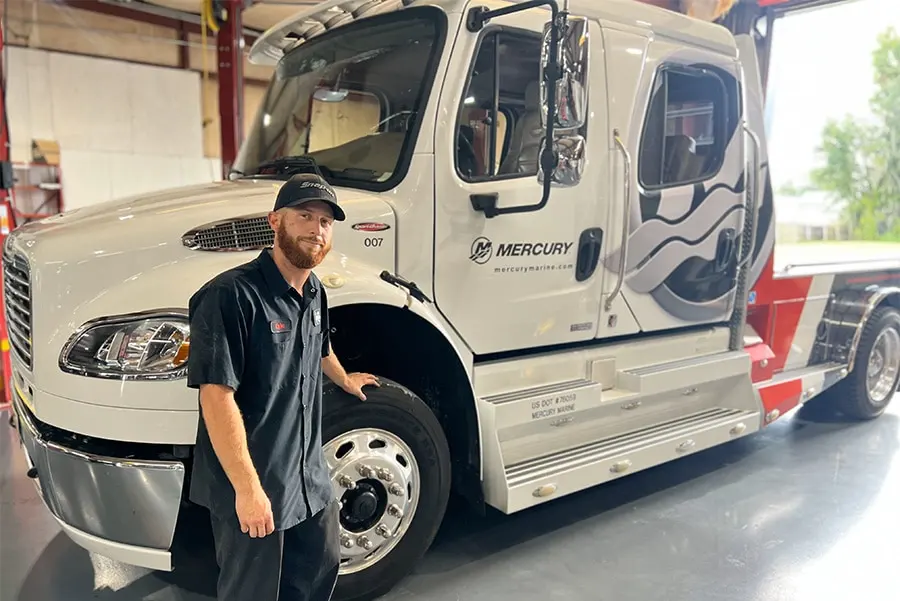
The annual DOT inspection is a checklist with real consequences. A defect found in our bay becomes a repair order and a recheck. The same defect found by an officer at the roadside can land on the carrier’s safety record, and a serious one can park the truck out of service where it stands. Shady Hills operators can have the checklist worked through at our Brooksville shop, where a failed item turns into a repair order in the next bay instead of a hunt for another garage.
Booking an annual inspection from Shady Hills
Call (352) 433-3800 to set a time. Doors open at 7:00 on weekday mornings, and an early slot leaves time to deal with whatever the inspection finds. From the middle of Shady Hills, the drive is about 18 road miles: Shady Hills Road to County Line Road, the Suncoast Parkway from Exit 37 to SR-50, then east into Brooksville. Bring every unit that runs together, plus last year’s report if you have it. Fleets can also have inspections done at the yard by our mobile technicians.
Which Shady Hills units need the federal annual
The federal line sits at 10,001 pounds. Run a truck, or a truck-and-trailer combination, rated at or above that weight across state lines for business, and it counts as a commercial motor vehicle that must pass a periodic inspection no more than 12 months apart.
That reaches further than people expect. A 1-ton pickup pulling a loaded gooseneck can cross the line. So can a dump truck, a roll-off or a service truck. In a combination, the tractor and each trailer are separate vehicles, which means separate inspections and separate proof.
What the inspector checks on a Shady Hills unit
The federal minimum standard covers the systems that keep a truck stopping, steering and holding together: service and parking brakes and their air or hydraulic components, coupling devices, the exhaust and fuel systems, every required light and reflector, steering linkage and gear, suspension and frame, tires, wheels and rims, and the windshield and wipers. Trailers add brakes, lights, wiring and, where required, rear impact guards.
If your truck works on dirt, such as the construction and demolition debris landfill in the county’s Hays Road complex or any unpaved job site, give the undercarriage a rinse before inspection day. Caked mud hides cracked frame members, leaking seals and loose fasteners, and nobody can pass what nobody can see.
Records to keep after a Shady Hills inspection
When the inspection is complete, you get a report that identifies the vehicle, the date and the components checked, along with our digital inspection photos and notes. A decal or a copy of the report travels with the truck, and the original, or a copy of it, stays in the carrier’s files for 14 months.
Passing once a year does not replace the daily walkaround. Between annual visits, federal rules make each driver responsible for confirming before every trip that the truck is fit to run, and catching a dead marker lamp or a soft tire in your own yard beats having an officer find it.
When a Shady Hills truck does not pass
Failed items show up in the digital inspection with photos, notes and the repair needed. Worn linings, dead lamps, thin tires, leaking air lines and loose steering parts are routine jobs for us, so most get fixed during the visit; after the repair the inspector looks at the item again and the report shows it passing. Trailers often fail on brakes, lighting and wiring, which our trailer repair page covers. Fleets can stagger due dates across the year and pair them with scheduled service; see Shady Hills fleet maintenance.
The full inspection standard is explained on our DOT inspections page, and operators across County Line Road will find a pre-inspection walkaround on the Spring Hill DOT inspections page.