
Pulling a loaded boat trailer up a wet ramp asks more of an automatic transmission in under a minute than an hour of highway cruising does. Hudson has public boat ramps and about 3,465 waterfront properties on its canals, so if your truck launches here, that minute is part of its duty cycle. We diagnose, repair and rebuild diesel truck transmissions in Brooksville, a 24-mile drive up US-19 and SR-50 from the center of Hudson.
Pulling a boat up a Hudson ramp
A ramp pull is slow, steep and heavy all at once. The torque converter stays unlocked, slipping and making heat, while the engine works hard at low road speed. Do that in July with a cooler partly blocked by debris and the fluid temperature can spike well past where the transmission likes to live. Cook the fluid enough times and it stops protecting anything: friction material glazes, and seals go stiff.
A few habits help. On a 4x4, low range lets the truck climb the ramp with far less converter slip. A transmission cooler with clean fins and good airflow pays for itself, and a fluid change on the severe service schedule matters for any truck that tows regularly. If your truck shows transmission temperature, watch how quickly it comes back down after the pull.
Commercial Way traffic between Hudson and SR-50
The other half of a Hudson truck’s life is US-19, with its signals, turn lanes and stop-and-go traffic between Hudson and SR-50. Each green light means another launch with the converter unlocked, so a truck towing through that stretch builds heat even without a ramp. Signs that heat has started to do damage:
- Harsh or lazy shifts, or flare between gears, once everything is up to temperature
- A shudder at steady speed, often the torque converter clutch
- Dark fluid, a burnt smell or wet cooler lines
- A temperature reading on your usual run that sits higher than it did last year
Limp mode in Hudson: drive the 24 miles or tow
When an electronically controlled automatic sees a fault it does not trust, it can default to 1 gear to protect itself. Treat that as a request for attention, not a green light. Whether a truck in limp mode should cover 24 road miles depends on why it got there. A sensor or wiring fault may allow a careful drive; low or burnt fluid and slipping mean tow it. Call before you decide, and we will help you weigh the drive, a tow or a mobile diagnosis at your yard or the roadside.
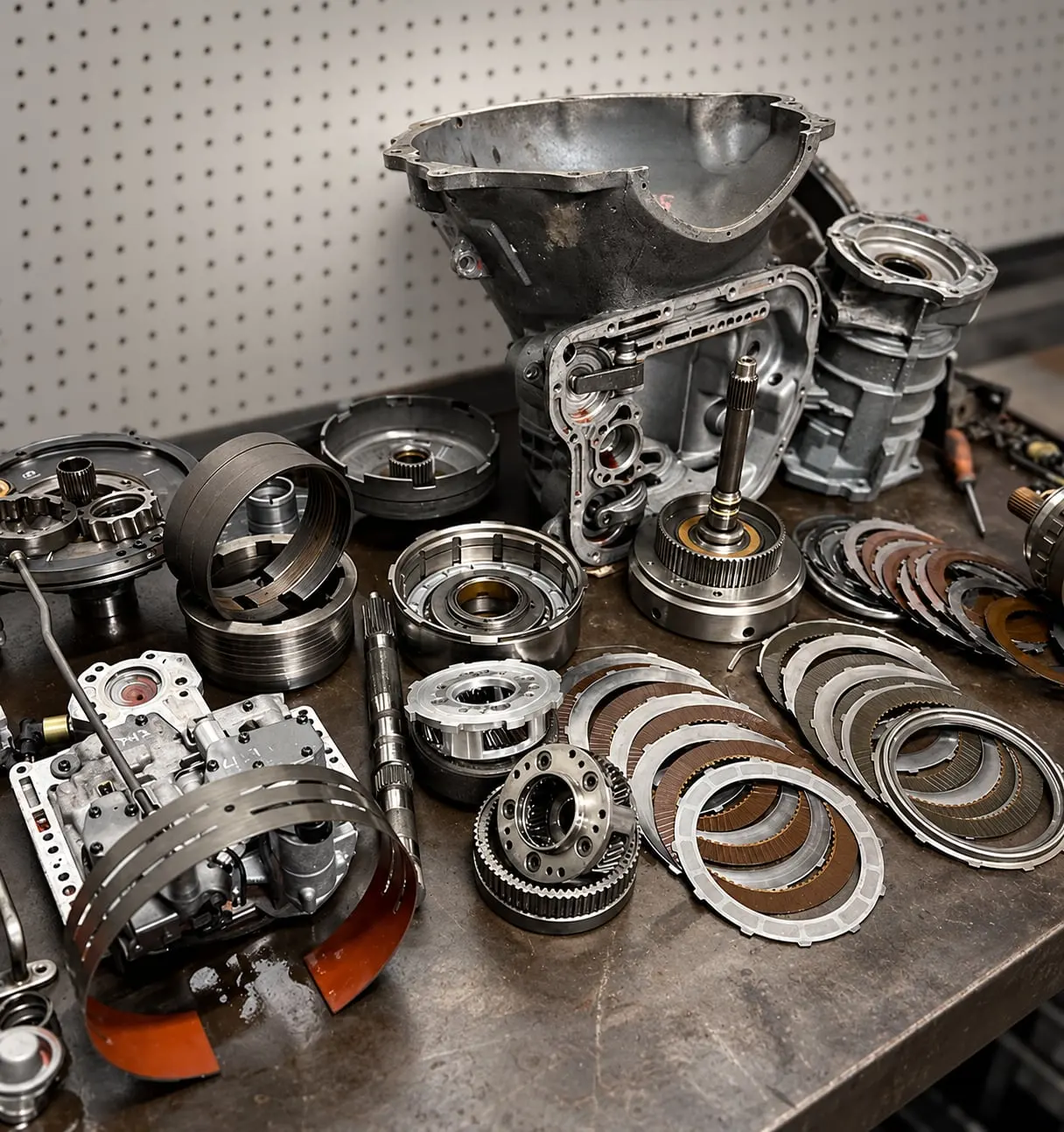
Hudson transmissions on the bench
Ford units span 3 generations: the 5R110W TorqShift behind the 6.0 and 6.4 Power Stroke (our 5R110W article goes deep on it), the 6R140 behind the early 6.7, and today’s 10R140 10-speed. Behind a Cummins in a Ram you will find a 68RFE or an Aisin. GM’s Duramax pickups pair with Allison automatics, and Allison units also turn up in medium duty trucks, buses and motorhomes.
Before any number goes on paper, 3 things happen. The scan tool, Ford IDS on Fords and WiTECH on Rams, shows which gear the module wants against what the transmission delivers, how much the converter slips and what each solenoid is being told. The fluid is checked hot, at the level the manufacturer specifies, then examined for color, smell and metal. And a road test reproduces the complaint under the load that causes it. Some problems end with a solenoid, a sensor, an external leak or a software update. Others need the unit out and apart, and in that case you see the photographs and hear the failure explained before approving a rebuild. Labor on transmission work is covered like everything else we do, 3 years / 36,000 miles.
Our transmission repair and rebuild overview walks through every step. If the engine has been acting up too, start with Hudson truck repair; the SR-52 version of this story is on the Bayonet Point transmission repair page.