
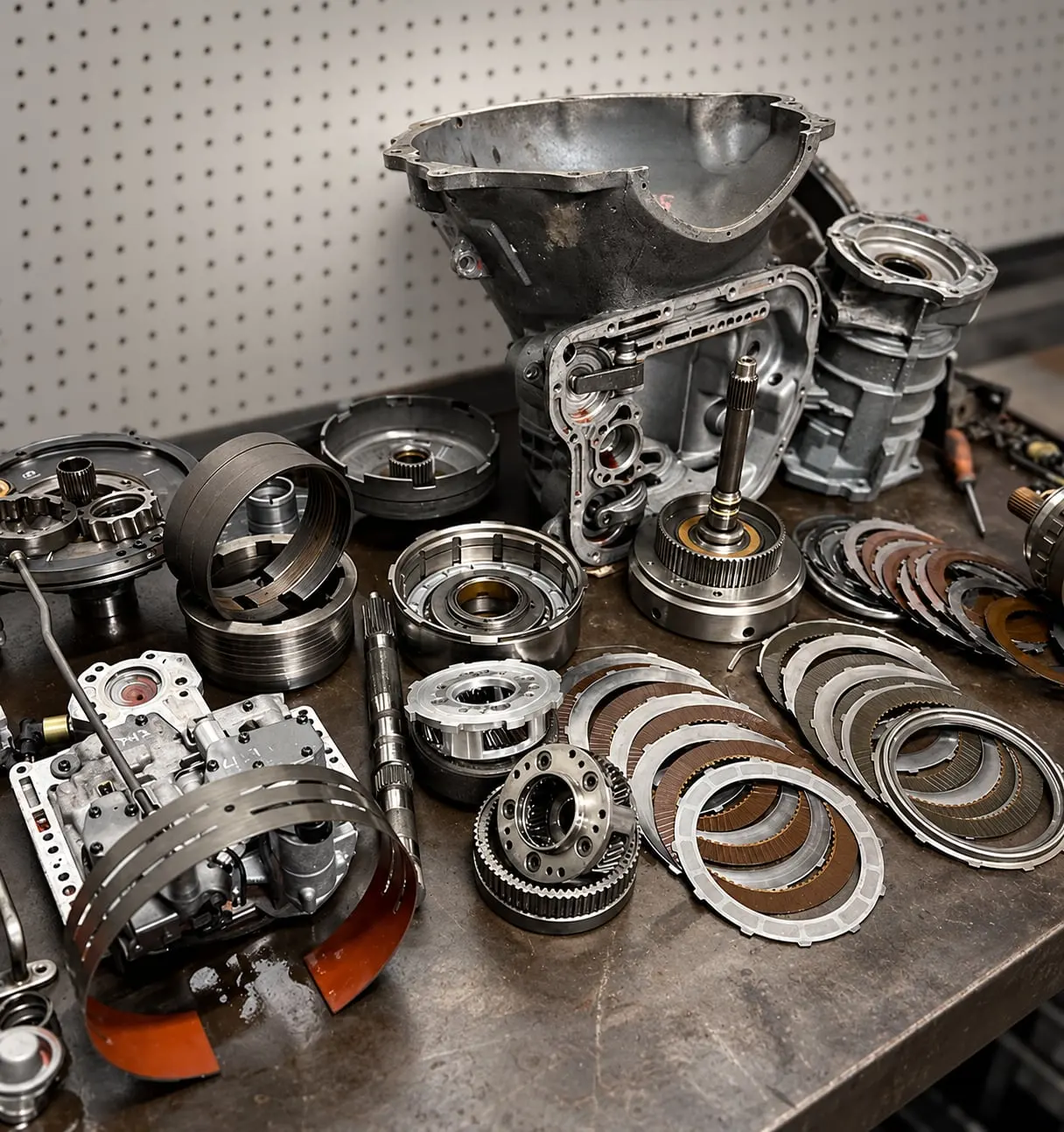
Transmissions in Spring Hill trucks live 2 different lives. Around town, on US-19, Spring Hill Drive and Mariner Boulevard, it is stop-and-go between traffic lights and turn lanes. On the Suncoast Parkway it is long, steady cruising. A transmission that handles one well can still struggle with the other, and the symptoms tell us where to look. RDI Power repairs and rebuilds diesel truck transmissions at 1665 Donto Way in Brooksville, about 12 road miles from central Spring Hill.
Stop-and-go on US-19 and Spring Hill Drive
Heat is what wears out automatic transmissions, and stop-and-go traffic makes heat. Every start from a light runs the torque converter unlocked, which heats the fluid, and a truck pulling a trailer through town does that under load. Add a Florida summer and a cooler that is partly blocked, and fluid temperature climbs past where it should be. Over time the fluid breaks down, clutch packs glaze and seals harden.
Signs worth a call:
- Shifts that are harsh, late or slipping, especially once the truck is hot
- A shudder at steady speed, which can point to the torque converter clutch
- Fluid that is dark, smells burnt or is leaking from the cooler lines
- A transmission temperature that runs higher than it used to on the same route
- Stored codes for solenoids, line pressure or gear ratio
What the Parkway miles show
Steady cruising is the easy part of a transmission’s life. On the Suncoast Parkway the converter clutch stays locked, the fluid runs cooler and shifts are few. When a highway truck does develop a problem, it tends to show up as a shudder at a steady cruising speed, a converter that will not stay locked, or a leak at the cooler lines that slowly drops the fluid level. Those are worth catching early, because low fluid on a long run turns a small leak into burned clutches.
Limp mode and the 12-mile question
When a modern automatic detects a serious fault, it may drop into a fail-safe mode that holds a fixed gear so the truck can still move. That is a warning, not a way to commute. A truck in limp mode on Mariner Boulevard can usually be eased a short distance to a safe spot, but whether it should make the 12-mile trip to Brooksville depends on why it went into limp mode. If the fluid is low or burnt, or the transmission is slipping, more driving can turn a repair into a rebuild. Call (352) 433-3800 and describe what happened; we will help you choose between driving, towing and a mobile diagnosis.
Units on the bench
On the Ford side, that means the current 10R140 10-speed and the 6R140 before it, back to the 5R110W TorqShift of the 6.0 and 6.4 years. Ram trucks carry the 68RFE or the Aisin, and Duramax pickups use Allison units. Medium-duty chassis cabs, buses and motorhomes mostly carry Allison automatics as well. Our post on 10R140 transmission repair covers the 10-speed in detail.
Diagnosis with factory-level software
Ford IDS and WiTECH let us read the transmission module the way a dealer would: commanded versus actual gear, converter slip, solenoid status, fluid temperature, stored codes and adaptive data. Some complaints are settled by a software update or an adaptive relearn after a repair. Others need a pressure test, a pan drop or a teardown. When a unit does need rebuilding, we tell you why it failed and what is worn, show you the photos from the digital inspection and lay out the options before work starts. The labor on a transmission job is covered by our 3-year / 36,000-mile warranty.
Shifting problems and engine problems often show up together on trucks that tow; our Spring Hill truck repair page covers the engine side. For the full process, see truck transmission repair and rebuild, and for how towing on rolling ground affects transmissions, our Brooksville transmission repair page goes into it.