
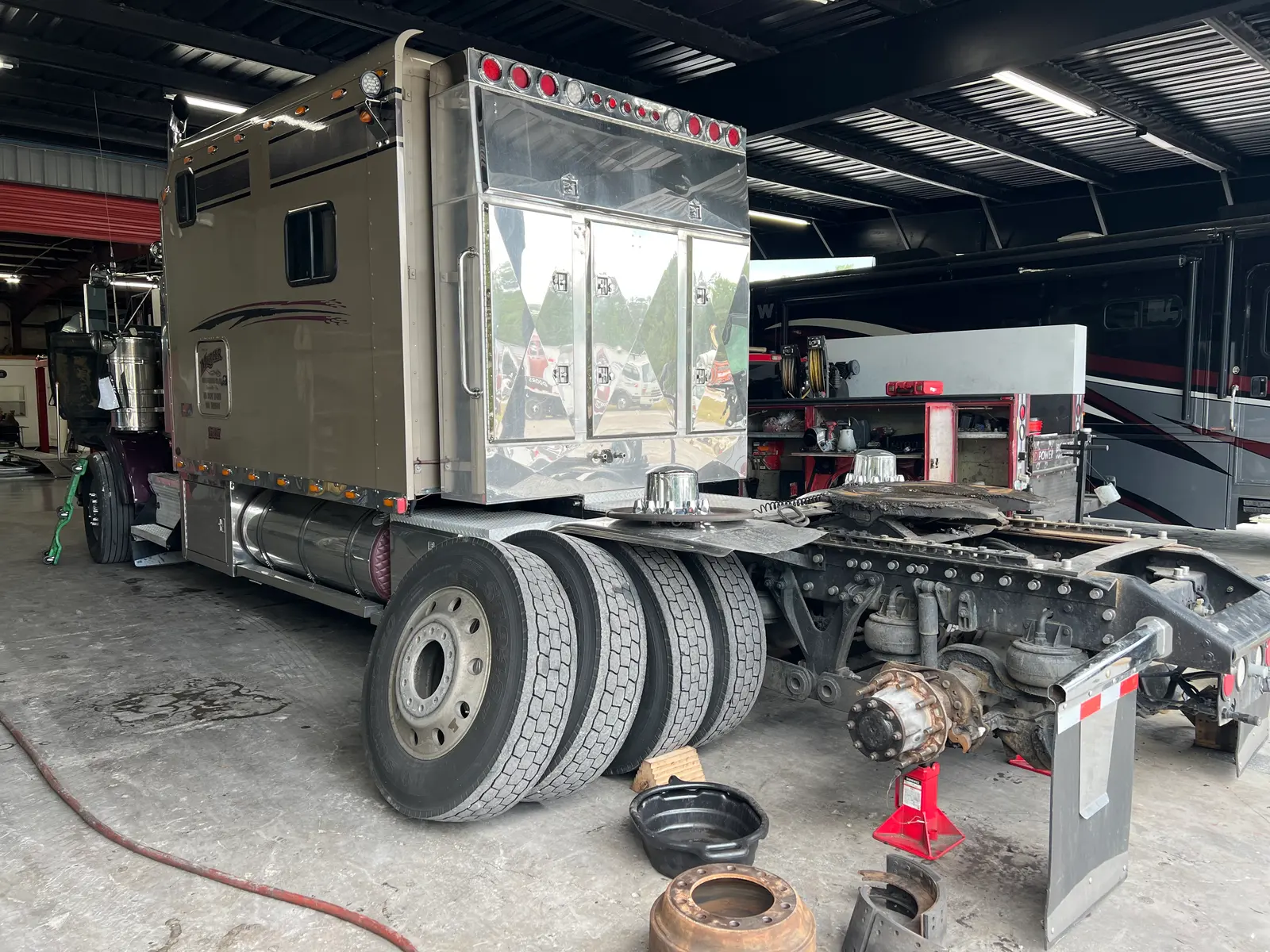
Spring Hill trucks rack up miles. The Suncoast Parkway runs about 50 miles south to Tampa from its SR-50 interchange, and a pickup or van that commutes or works that route can put thousands of highway miles a month on its tires. At highway speed, small alignment errors add up fast. RDI Power aligns light, medium and heavy duty trucks at our Brooksville shop, about 12 road miles from the middle of Spring Hill.
Highway miles magnify a small toe error
Toe, the amount the front tires point in or out relative to each other, is the angle that wears tires fastest when it is wrong. A setting that is only slightly off drags each front tire a little sideways on every revolution, and over a Parkway commute that adds up to feathered tread and shoulders worn down thousands of miles early. Camber errors wear one edge of the tire. Caster mostly affects how the truck tracks and how the wheel returns to center. We measure all 3, plus the rear thrust angle, and set them to spec.
Pull, wander and an off-center wheel
These 3 complaints each point somewhere different:
- Pull to one side. Often a camber or caster difference from side to side, but a dragging brake caliper or a tire with an internal belt problem can pull just as hard. We rule those out first.
- Wander at highway speed. Low caster, worn steering components or a loose steering gear make a truck feel vague on the Parkway. An alignment helps only after worn parts are replaced.
- Steering wheel off center. Usually a toe or rear thrust problem; sometimes a sign that a tie rod or steering part got bent.
Front ends that need parts first
On 4x4 Ram and Ford heavy-duty pickups with solid front axles, the track bar, tie rod ends and ball joints have to be tight. When they wear, the truck can develop a violent front-end shake after a bump at speed, often called death wobble. A steering stabilizer can mask it for a while, but the cure is replacing the worn parts and then setting the alignment.
Vans and chassis cabs have their own pattern. A Sprinter or a service-body truck that carries a heavy load every day can sag over time, and changing ride height changes alignment. If a work truck has started eating tires, we check springs and ride height along with the angles; our Spring Hill truck repair page covers the suspension and steering repairs that sometimes come first.
What happens on the alignment rack
An alignment at our shop starts with a short road test to feel the complaint, then a look at the tires and a check of the steering and suspension for play. Tire pressures get set before anything is measured, because a soft tire changes the readings. Then we measure toe, camber, caster and thrust, adjust what the truck’s design allows, and road test again to confirm the wheel sits straight and the pull or wander is gone.
Tires and alignment together
New tires on a misaligned truck wear the same way the old ones did. Before you replace a set, have the alignment checked; our article on signs you need new diesel truck tires explains what to look for in the tread. Every alignment visit includes a digital inspection with photos of the tires and front-end parts, so you can see the wear we are talking about.
For more on how we align trucks of every size, see truck wheel alignment. Our Brooksville truck alignment page covers tandem drive axles and job-site trucks. To book a slot, call (352) 433-3800.