
Shifting trouble is easy to describe and hard to diagnose from the driver’s seat. A slip, a flare or a harsh downshift can come from worn clutches, but just as often from a sensor, a solenoid, a wiring fault, old fluid or software. RDI Power sorts that out at our Brooksville shop, about 40 minutes from central Inverness, and only recommends a rebuild when the evidence calls for one.
Main Street traffic and SR-44 cruising: what each does to an Inverness transmission
Inverness gives a transmission 2 very different jobs. On Main Street, where US-41 and SR-44 share the road between Talmage Avenue and Highland Boulevard, it shifts constantly: launch, upshift, brake, downshift, stop. That kind of driving wears clutch packs and keeps the torque converter clutch cycling. On the 15-mile run of SR-44 toward I-75, it spends long periods in top gear with the converter locked, and that is where a converter clutch problem shows up as a shudder at steady speed.
Add towing to either one and heat becomes the main enemy. Fluid that runs hot oxidizes, loses its friction properties and stops protecting the clutches. Trucks that tow often belong on the severe service schedule for fluid and filters, and a transmission temperature gauge, if yours has one, is worth a glance on every long pull.
Should an Inverness truck in limp mode make the trip south?
When the module senses something it does not trust, it can lock the transmission in a single fixed gear and stop shifting. The truck still moves, slowly, but the warning says nothing about the cause, and the cause decides whether 24 miles of driving is harmless or expensive.
Start with what you can see. Pull over, let the truck idle a minute, and look under it for fresh fluid. Check for a scorched odor or a high-temperature message on the dash. Any of those means the unit is hurting, and a tow costs less than the damage another 40 minutes would do. If none of them is present and the fault came with a check engine light, the cause is often electrical, a sensor or a connector, and one of our mobile technicians can pull the codes in Inverness and tell you whether the drive is safe. Either way, a call to (352) 433-3800 before you set off is the right first step.
Ford, Ram, GM and Allison units from Inverness
Ford Super Duty owners bring us everything from the old E4OD and 4R100 to the 5R110W TorqShift, the 6-speed 6R140 that ran from 2011 through 2019, and the 10-speed 10R140 in trucks built since 2020. Ram owners bring the 47RE and 48RE from 5.9 Cummins trucks, the 68RFE from the 6.7 era and the Aisin found in high-output models. Chevrolet and GMC heavy-duty pickups use Allison units, and so do most of the buses, medium duty chassis cabs and diesel pushers we see. Stick-shift trucks and clutch replacements fall under the same roof.
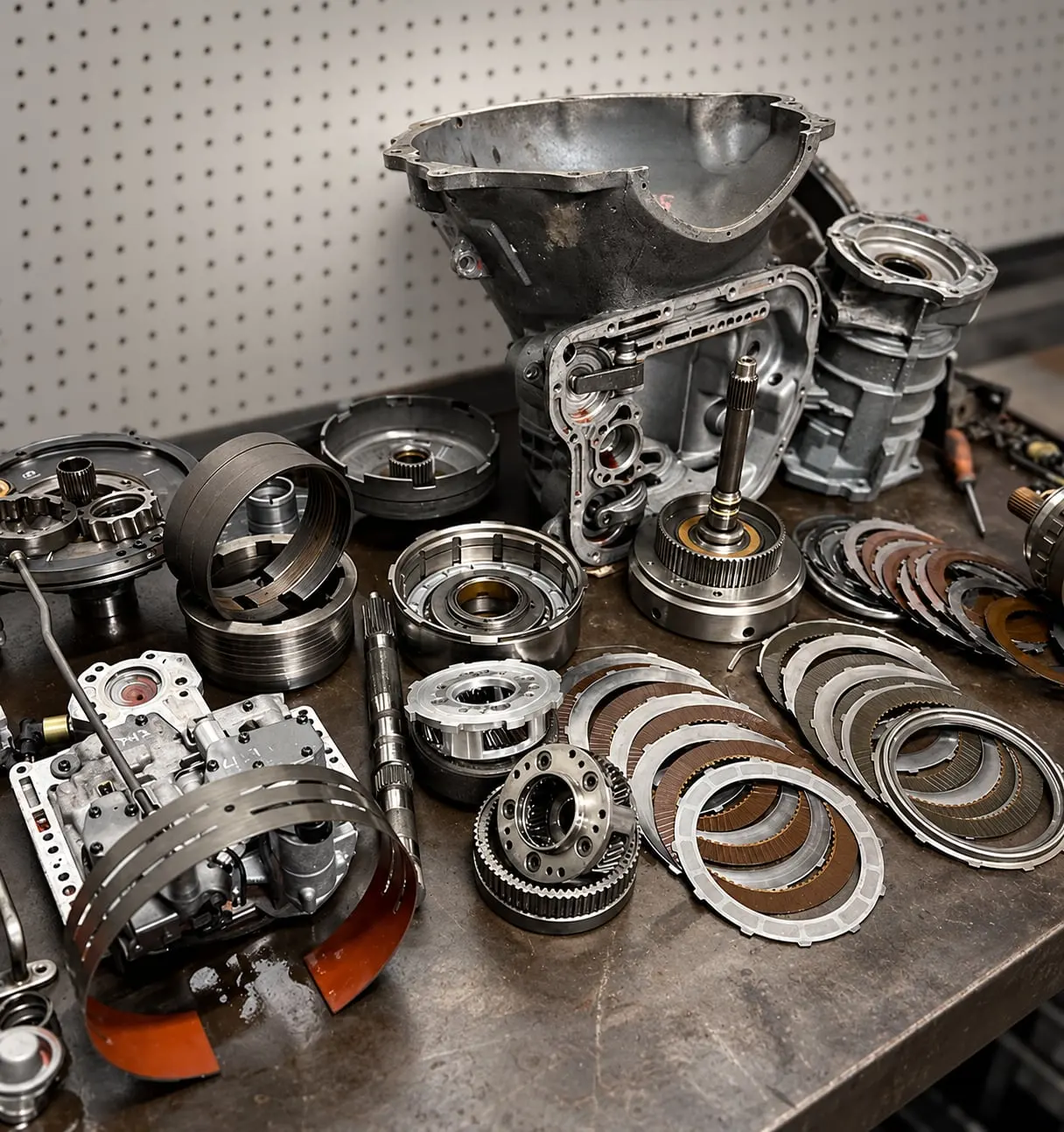
Our process does not change by make. A scan of both control modules comes first, followed by a test drive with a data logger watching gear commands, slip and temperature. Fluid gets read at the temperature the factory calls for, then judged by eye, nose and the magnet on the pan. Electrical circuits for each solenoid and sensor are checked with a meter. Plenty of trucks leave with a new sensor, a repaired harness, a valve body or a reflash instead of a rebuild. When the damage is internal, we lay out a rebuild against a remanufactured replacement, and with either one the cooler is cleaned out or replaced so old debris cannot follow. Our article on transmission rebuild vs. replacement goes further into that decision.
For Inverness customers, as everywhere else, our transmission labor warranty is 3 years or 36,000 miles. Shift complaints sometimes trace back to the engine, which our Inverness truck repair page covers. For the whole process, see truck transmission repair and rebuild, and for trucks based on the city’s south edge along Pleasant Grove Road, the Inverness Highlands South transmission repair page applies.