
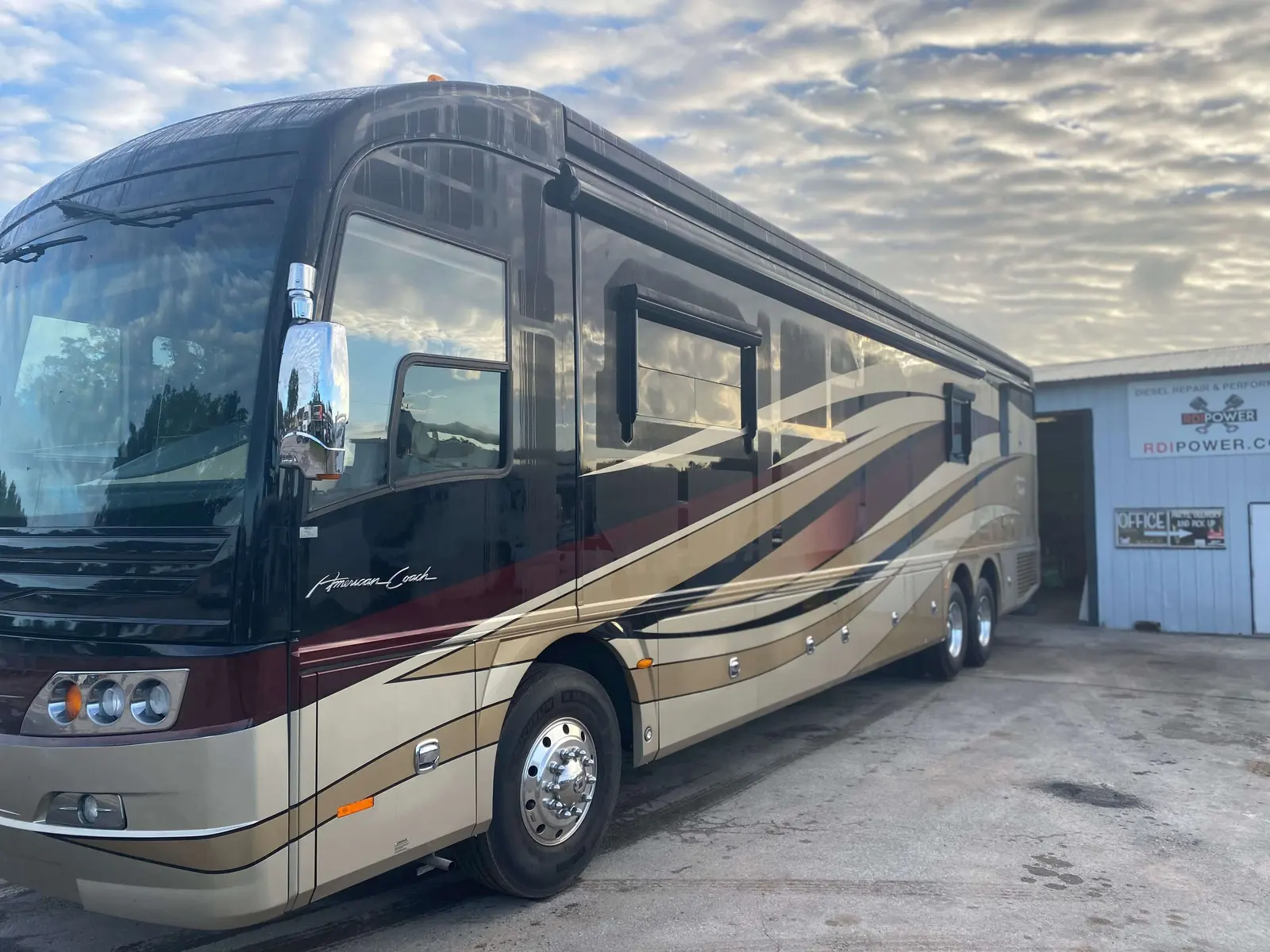
A diesel pusher is a heavy truck chassis with a house built on top, and the chassis side needs a shop that knows heavy diesel. RDI Power repairs the engine, transmission and chassis on diesel motorhomes in Brooksville, and our ASE certified technicians keep their certifications current as vehicle technology changes. When the coach cannot come to us, our mobile technicians can often come to it, at a campground or at your home.
What we work on, and what we do not
RV owners deserve a straight answer up front, so here it is. We are a diesel repair shop, and we work on the parts of the coach that make it go, stop, steer and stay cool from the engine.
We work on:
- Diesel engines, including Cummins, Caterpillar and Detroit engines used in pushers. See Cummins repair and Caterpillar engine repair.
- Allison automatic transmissions, drivelines, U-joints and differentials
- Air brakes and hydraulic brakes
- Air suspension, shocks, springs, bushings and other suspension parts
- Steering gearboxes, power steering pumps and steering linkage
- Radiators, fans, water pumps, thermostats, hoses and heater cores
- Dash air conditioning: compressors, condensers, lines, driers and expansion valves or orifice tubes
- Fuel injectors, fuel pumps and fuel lines
- Chassis sensors, wiring and engine control modules
- Fluids, filters and wheel alignment
We do not work on: roofs, slide-outs, rooftop air conditioners, appliances, plumbing, awnings or water leaks into the living area. Those are coach systems, and an RV coach technician is the right call for them.
RV service: what we look at
Regular service keeps a motorhome safer on the road, and it is the best chance to catch a problem while it is still small. During an RV service visit our technicians inspect:
- Suspension and steering: bushings, gearboxes, shocks, springs, tie rods and linkage
- Brakes: pads, rotors, calipers, shoes, drums, wheel cylinders, hoses and air brake components
- Belts and hoses for cracks and dry rot
- Tires for uneven wear and age
- Oil, transmission fluid, power steering fluid and brake fluid leaks
- U-joints and driveline condition
- Fuel lines and fittings
- Mechanical cooling fans and their drives
Service items we perform include oil and filter changes, chassis lubrication, transmission fluid and filter service, coolant, power steering fluid and brake fluid flushes, engine air filters, cabin air filters, fuel filters and draining the water separators. You get a digital inspection with photos and technician notes, so you can see the cracked hose or the leaking seal for yourself.
Common RV chassis repairs
A motorhome may cover fewer miles in a year than a pickup, but time wears parts out on its own. Rubber belts and hoses harden and crack whether the coach is driven or not, especially when it sits for months in the Florida sun. The repairs we see most on diesel coaches include:
- Accessory belts, idlers and tensioners
- Radiators, water pumps, hoses, fans and thermostats
- Head gaskets and other engine repairs
- Steering gearboxes, power steering pumps and high- and low-pressure steering lines
- Heater cores and heater hoses
- Brake pads, rotors, calipers, wheel cylinders, shoes, drums, hoses and master cylinders
- Air brake and air suspension repairs
- Shocks, tie rods, bushings and springs
- Dash air conditioning repairs
- Sensors and engine control modules
- Fuel injectors, fuel pumps and fuel lines
Drivelines on a long coach carry a lot of torque at a lot of angles. Our article on failing U-joints in RVs covers the warning signs.
Diesel pusher engines and the heat they live with
Pushers commonly run Cummins ISB, ISC, ISL and ISX engines, Caterpillar C7, C9, C13 and C15 engines, or the Detroit Series 60. Mounting the engine in the rear brings its own problems. The engine bay is tight and hot, so hoses, belts and wiring age faster there than they would in a truck. Rear and side-mounted radiators and charge air coolers pull in road dust and oily grime, and once the fins load up the coach starts running hot on long pulls even though nothing has technically failed. Cleaning and inspecting the cooling stack is part of how we chase an overheating complaint, before we condemn a radiator or a fan drive.
Coaches that sit
Long storage causes its own list of problems, and Florida’s heat and sun speed them up:
- Chassis batteries discharge and sulfate if nothing keeps them charged.
- Diesel fuel ages, and water in the tank can feed microbial growth that plugs filters on the first trip out.
- Brake calipers and their slide pins can stick after months without use.
- Tires age from sun and heat whether they are driven or not, so tread depth alone does not tell you if they are safe.
- Seals and gaskets dry out, and a coach that never leaked can start dripping after a long sit.
None of this is a reason not to store a coach. It is a reason to have the chassis checked before the first trip of the season.
Leaks: finding the real source
A drip under a motorhome can come from a dozen places, and fluid travels along frame rails and crossmembers before it falls. We clean the area, identify the fluid, and trace it back to the seal, gasket, hose or fitting that is actually failing, whether that is engine oil, coolant, transmission fluid, power steering fluid, brake fluid or fuel. Air leaks in the brake and suspension systems get found with the system aired up. If a leak is bad enough that driving could cause more damage, we will tell you, and the coach may need to come in on a tow.
Transmissions, brakes and alignment
Most diesel pushers use an Allison automatic, and it needs clean fluid at the right level to live a long life. Shift complaints get diagnosed with a scan and a road test before anyone talks about a rebuild; see transmission repair and rebuilds. Brake work covers both air and hydraulic systems, described on our brake system repair page. A coach that wanders, pulls or wears the front tires unevenly needs an inspection of the steering parts and a motorhome alignment.
Mobile RV repair at campgrounds and homes
Moving a coach that will not run, or that should not be driven, is expensive and stressful. Our mobile technicians can diagnose the coach where it is parked, at a campground or at your home, and handle many brake, cooling, fluid, electrical and suspension repairs on-site. Work that needs a lift, an alignment rack or a transmission removed is done at our Brooksville shop, and we will tell you which kind of job yours is before anyone shows up. See mobile diesel repair for how on-site service works.
Heading out from Brooksville
Brooksville is a convenient place to start a trip in any direction. US 98 leaves town northbound as Ponce de Leon Boulevard toward Citrus County, US 41 runs north and south on Broad Street, and Tampa is 45 miles to the south. A coach that gets its chassis and drivetrain checked here starts that first leg with a known condition instead of a hope.
Before storage and before the trip
Whether the coach sits through the summer or heads out for the season, schedule service at both ends. Before storage, an inspection catches leaks that would otherwise sit for months and do damage. Before a trip, check the brakes, tires, belts, hoses, fluids and batteries before the first long highway run. Our RV pre-trip maintenance checklist walks through what to look at.
Repairs carry our 3-year/36,000-mile labor warranty. Call the shop or request service online, tell us where the coach is parked and what it is doing, and we will lay out the plan.